

Heat Pump vs Furnace + AC: True 10-Year Cost of Ownership
Heat pump vs furnace + AC 10-year cost of ownership for GTA and Ontario homes: install, operating, maintenance, rebates, and lifetime totals compared in 2026.
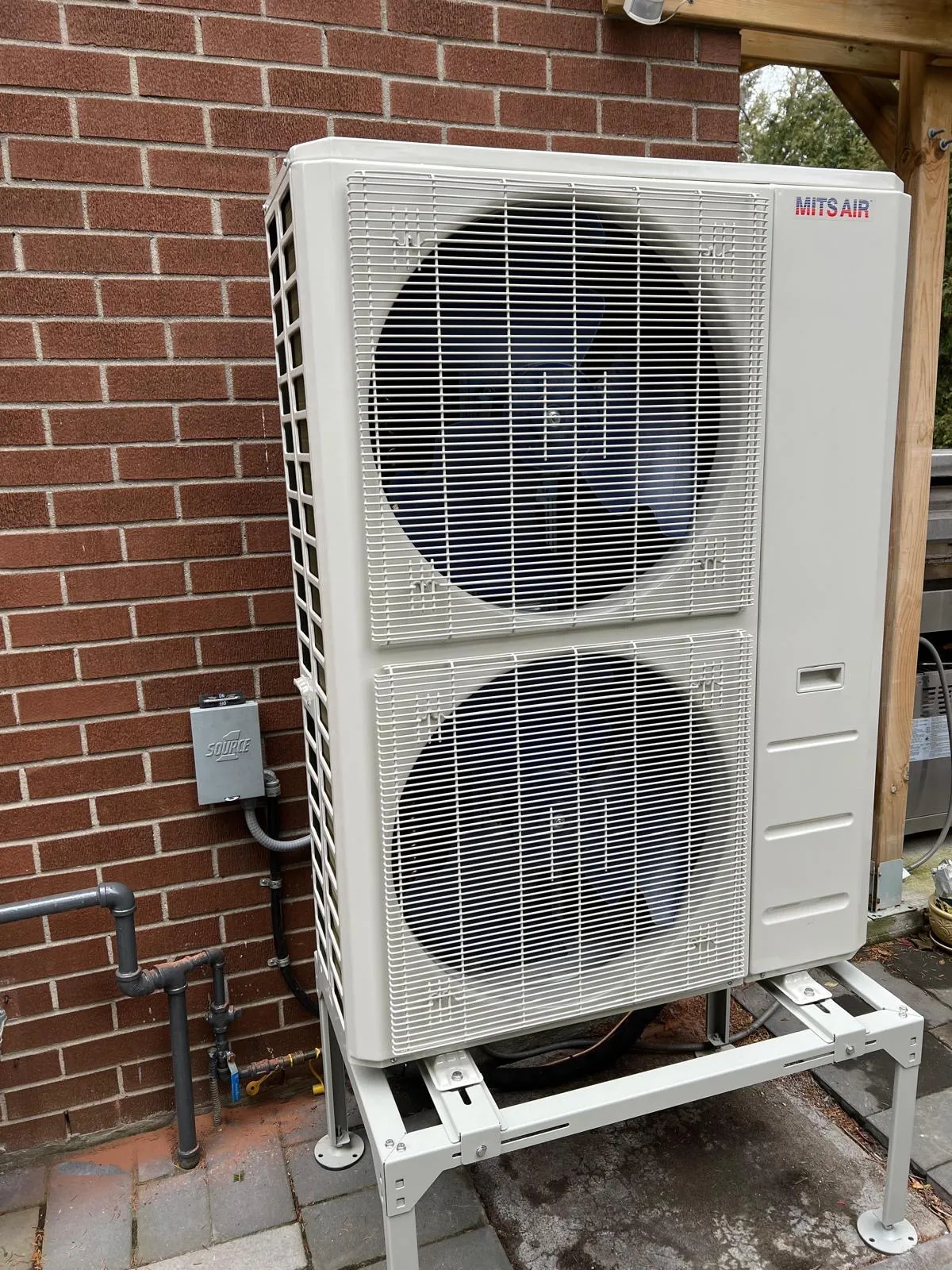
When a GTA homeowner asks us “what’s cheaper — a heat pump or a furnace and AC?” the honest answer is that the sticker price tells you almost nothing. The real question is what the system will cost you over the decade you actually own it.
That means install, energy bills, maintenance, repairs, and rebates — all stacked together. Below is how the math actually plays out for a typical Greater Toronto Area home in 2026.
The short version: A new furnace plus AC is usually cheaper to install but more expensive to run. A cold-climate heat pump costs more upfront but qualifies for the bigger Ontario rebates and runs more efficiently in mild weather. Over 10 years the two often land within a few thousand dollars of each other — and a dual-fuel setup frequently wins outright. The right answer depends on your home, not a chart. See our heat pump vs furnace breakdown for the technical side.
What “10-year cost of ownership” actually includes
A real cost-of-ownership number is not just the invoice on installation day. For HVAC equipment, it is the sum of five things over a 10-year window:
- Install cost — equipment, labour, materials, permits, and any electrical or gas upgrades.
- Operating cost — what you pay each year in gas and electricity to heat and cool your home.
- Maintenance — annual tune-ups and filter changes.
- Repairs — typical out-of-warranty fixes that show up in years six through ten.
- Rebates and incentives — money back from federal, provincial, or utility programs.
Ten years is a reasonable horizon because it lines up with most parts and labour warranties, and because the average GTA furnace runs 15–20 years while a heat pump or AC runs 12–15. Past year ten, repair odds climb and the math gets noisy.
Install cost: the obvious gap
A standard high-efficiency furnace plus central air conditioning install in the GTA, fully done, typically runs $8,500 to $13,500 as of 2026 depending on home size, ductwork, and equipment tier.
A cold-climate heat pump install — sized to handle GTA winters with a small backup — typically runs $13,000 to $20,000 before rebates. Electrical panel upgrades, if needed, can add $1,500 to $3,500.
So at the cash register, furnace plus AC wins. But that gap shrinks fast once rebates enter the picture — and reverses for many homes.
Operating cost: where heat pumps pull ahead
Gas furnaces convert roughly 95–98% of the fuel they burn into heat. Heat pumps move heat instead of making it, so they routinely deliver two to three units of heat per unit of electricity in mild and moderate weather. In a deep cold snap, that ratio drops and a gas furnace often wins per dollar.
For a typical 2,000 sq ft GTA home, rough annual operating costs as of 2026 look like this:
| Cost type | Furnace + AC | Cold-climate heat pump | Dual-fuel (hybrid) |
|---|---|---|---|
| Heating (winter) | $1,400 – $1,900 gas | $1,100 – $1,700 hydro | $1,000 – $1,500 mixed |
| Cooling (summer) | $250 – $450 hydro | $200 – $400 hydro | $200 – $400 hydro |
| Annual total | $1,650 – $2,350 | $1,300 – $2,100 | $1,200 – $1,900 |
Your real numbers depend on insulation, air sealing, thermostat habits, and rate plans. But the pattern is consistent: heat pumps cost less to run in shoulder seasons, gas pulls ahead in extreme cold, and dual-fuel usually splits the difference on the cheaper side.
Maintenance and repairs: similar, but not identical
Both systems need one professional tune-up per year — roughly $150 to $250 as of 2026. The difference is that a furnace-plus-AC home has two appliances aging on different timelines, while a heat pump is a single year-round unit that gets twice the runtime of either standalone.
Skip annual maintenance and you typically void the manufacturer’s parts warranty. Over a 10-year window, that one missed tune-up can turn a $400 repair into a $2,000 one.
Typical out-of-warranty repair budget over years six to ten:
- Furnace + AC: $600 – $1,800 combined (igniters, capacitors, blower motor, AC capacitor, refrigerant top-up).
- Heat pump: $700 – $2,000 (reversing valve, defrost board, capacitor, refrigerant service).
Close enough that it usually does not decide the question.
Rebates: the lever that moves the answer
This is where the math often flips. As of 2026, the larger Ontario incentive programs target high-efficiency heat pumps because they reduce both energy use and emissions. Like-for-like gas furnace replacements typically qualify for little or nothing.
Depending on the program stack and your home, heat pump rebates can total $4,500 to $7,800 as of 2026 — sometimes more on whole-home retrofits. That effectively turns a $17,000 heat pump into a $10,000 to $12,500 system, which is cheaper than a new furnace and AC.
Programs change frequently, so verify current eligibility before you sign. Our Ontario HVAC rebates guide is kept current, and our installation cost breakdown walks through pricing in detail.
The 10-year total: putting it together
Here is a rough 10-year stack for a typical GTA home in 2026. Use it as a framework, not a quote — every house is different.
| Cost category (10 years) | Furnace + AC | Cold-climate heat pump | Dual-fuel |
|---|---|---|---|
| Install (after rebates) | $9,000 – $13,500 | $8,500 – $14,000 | $13,000 – $18,500 |
| Operating cost | $16,500 – $23,500 | $13,000 – $21,000 | $12,000 – $19,000 |
| Maintenance | $1,800 – $2,500 | $1,800 – $2,500 | $2,000 – $2,800 |
| Repairs (years 6–10) | $600 – $1,800 | $700 – $2,000 | $800 – $2,200 |
| 10-year total | $27,900 – $41,300 | $24,000 – $39,500 | $27,800 – $42,500 |
A few takeaways from these ranges:
- Heat pumps usually win on lifetime cost once rebates are applied — by roughly $2,000 to $5,000 in many GTA homes.
- Dual-fuel costs more on install but is the most resilient against future gas or hydro rate swings.
- Furnace plus AC is still competitive if rebates are tight, your home is leaky, or you have very low gas rates.
Which one is right for your home?
The decision comes down to three honest questions:
- How well-insulated is your home? A heat pump’s efficiency only shows up if the house can hold heat. A tight, well-sealed home gets the full benefit; a drafty one does not.
- What is your worst week? If you regularly see -20°C or colder, plan for solid backup heat — either a dual-fuel setup or a properly sized electric strip.
- What rebates do you actually qualify for? Get this confirmed in writing before you choose, because it can swing the answer by thousands.
A good contractor will walk you through all three before pitching equipment. If they jump straight to a brand or a model number, that is your cue to get a second opinion.
When to call Delson Air
If you are weighing a furnace-plus-AC replacement against a heat pump or dual-fuel system, get numbers for your home before you decide. Delson Air is a licensed, insured, TSSA-licensed and Enbridge Authorized Contractor serving the Greater Toronto Area. We will measure your home, size the equipment honestly, walk you through current rebate eligibility, and lay out a true 10-year cost comparison — not a sales pitch.
Call us at (647) 467-9919, browse our full list of services, or contact us for a no-pressure quote. Your comfort, our priority.
FAQ
Common questions
Why compare over 10 years instead of just the purchase price?
Does a heat pump really cost less to run than a gas furnace in the GTA?
What maintenance costs should I budget for either system?
Will rebates change the 10-year picture significantly?
Delson Air Team
Licensed, insured, TSSA-certified HVAC technicians serving the Greater Toronto Area.
Keep reading
More from the Journal
Programmable vs Smart Thermostats: 2026 Buyer's Guide
A 2026 buyer's guide comparing programmable and smart thermostats for GTA and Toronto homes — features, savings, compatibility, and which suits your Ontario HVAC system.
Tankless Water Heaters: Real GTA Costs in 2026
What does a tankless water heater really cost in Toronto and the GTA in 2026? Honest install ranges, tank vs tankless math, and what drives the bill.
AFUE Explained: Understanding Furnace Efficiency Ratings
AFUE explained for GTA homeowners: what furnace efficiency ratings mean, how 80% mid-efficiency compares to 96% high-efficiency, and what to pick in Ontario in 2026.