

AFUE Explained: Understanding Furnace Efficiency Ratings
AFUE explained for GTA homeowners: what furnace efficiency ratings mean, how 80% mid-efficiency compares to 96% high-efficiency, and what to pick in Ontario in 2026.
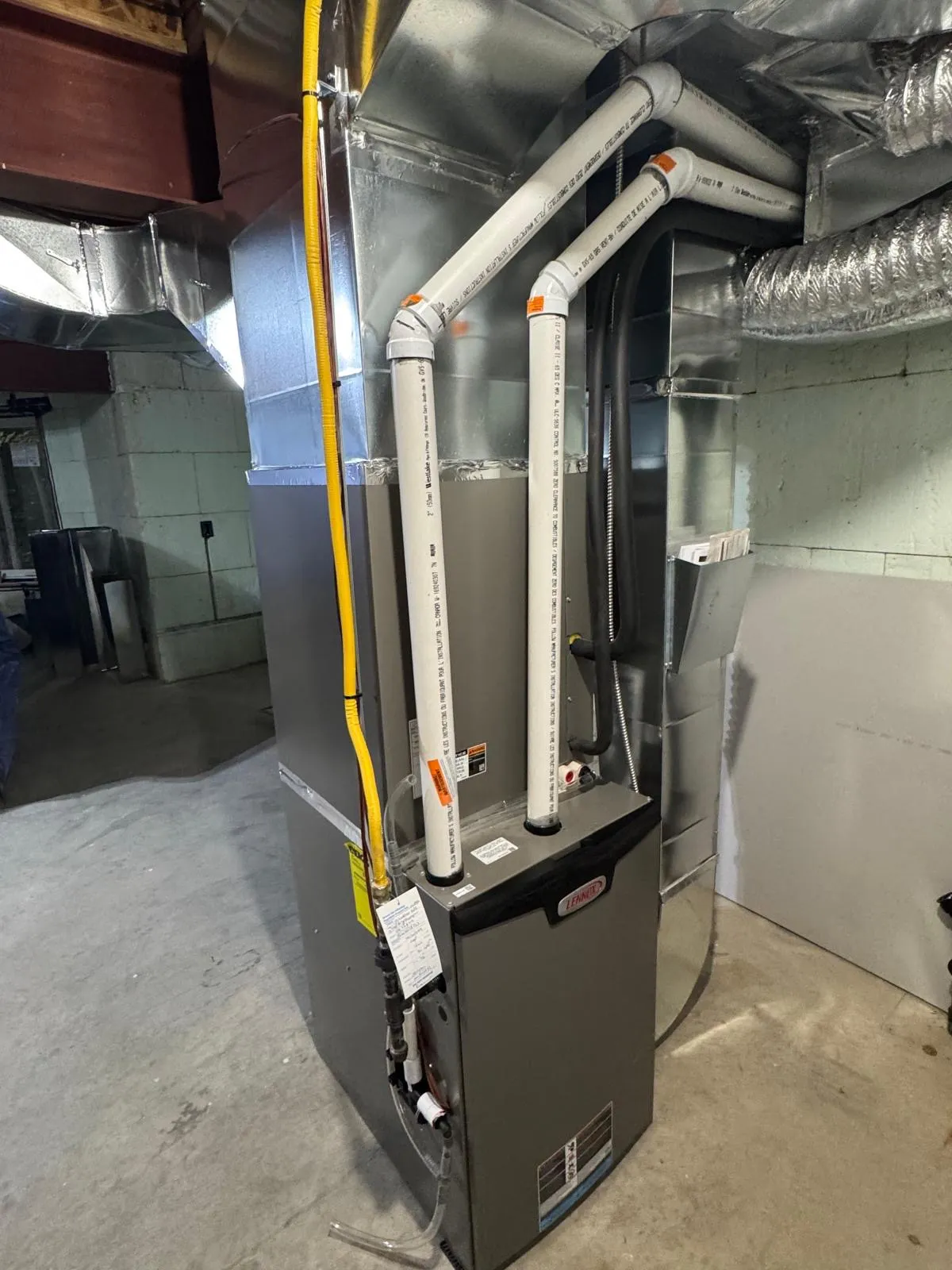
If you’ve shopped for a new furnace in the Greater Toronto Area, you’ve seen the AFUE number on every spec sheet — 80%, 92%, 96%, 98%. It looks like a simple “higher is better” rating, and mostly it is. But the gap between a mid-efficiency unit and a high-efficiency unit affects more than your gas bill. It changes the install, the rebates you qualify for, and how the furnace actually feels in your home.
Here’s a clear, plain-English breakdown of what AFUE really measures, what the numbers mean for an Ontario winter, and how to pick the right efficiency level for your house in 2026.
The short version: AFUE (Annual Fuel Utilization Efficiency) is the percentage of natural gas a furnace converts into heat over a full season. A modern 96% AFUE unit wastes only about 4% of the fuel; an older 80% AFUE unit wastes 20%. For most GTA homes, a 95–98% high-efficiency furnace is the right call — it’s required for most Ontario rebates and pays back the upfront difference within several years. Compare it against a heat pump before you commit.
What AFUE actually measures
AFUE stands for Annual Fuel Utilization Efficiency. It’s a percentage that tells you, over a typical heating season, how much of the fuel your furnace burns becomes usable heat inside your home versus how much escapes up the flue.
The rating accounts for steady-state burner efficiency plus cycling losses (the energy wasted every time the furnace starts up and shuts down). It does not measure electricity used by the blower fan, and it does not include duct losses — those happen after the furnace itself, so a leaky duct system can undo a high AFUE rating.
A 96% AFUE furnace turns 96 cents of every gas dollar into heat. A 1990s mid-efficiency unit at 80% turns only 80 cents into heat; the other 20 cents heats the sky. An older 1970s furnace at 60% efficiency was even worse — almost half the gas was wasted.
AFUE is a seasonal average, not a peak number. A 96% AFUE furnace doesn’t run at 96% every minute. It’s the long-run average over a full winter of starts, runs, and stops — which is exactly what you actually pay for.
Mid-efficiency vs. high-efficiency: the real difference
In Canada, furnaces split cleanly into two categories: mid-efficiency (around 78–82% AFUE) and high-efficiency condensing units (90–98% AFUE). There’s almost nothing sold in between, because the technology shifts at 90%.
A high-efficiency furnace has a second heat exchanger that pulls so much extra heat out of the exhaust gases that the water vapour in those gases condenses back into liquid — hence “condensing furnace.” That captured heat is why efficiency jumps past 90%. The trade-off is a more complex unit with a condensate drain and PVC sidewall venting instead of a metal chimney.
AFUE comparison: 80% vs 96%
| Feature | 80% AFUE (mid-efficiency) | 96% AFUE (high-efficiency) |
|---|---|---|
| Heat from each gas dollar | ~80 cents | ~96 cents |
| Gas wasted up the flue | 20% | 4% |
| Venting | Metal flue / chimney | PVC sidewall vent |
| Condensate drain needed | No | Yes |
| Typical install cost (GTA, 2026) | Lower — but limited availability | Roughly $1,000–$2,500 more |
| Ontario rebate eligible | Usually no | Usually yes (95%+ tier) |
| Typical lifespan | 15–20 years | 15–20 years |
| Best fit | Specific retrofits, certain chimney setups | Most GTA homes |
For a typical detached GTA home using roughly 2,000–2,500 m³ of gas per winter for heating, jumping from 80% to 96% AFUE saves roughly 15–20% on the heating portion of the gas bill. Over a 15-year furnace life, that adds up to real money — usually more than the price gap.
How much will a 96% AFUE furnace save you?
Honest answer: it depends on your current furnace, your home, and gas prices. But the math is straightforward.
- If your current furnace is 80% AFUE, upgrading to 96% AFUE cuts gas use for heating by roughly 17% ((96 − 80) ÷ 96).
- If your current furnace is 60% AFUE (anything from the 1980s or earlier), upgrading to 96% can cut heating gas use by roughly 37%.
- Savings only apply to the heating portion of your bill. Your hot water tank and stove are separate.
Pair that with the Ontario rebates available in 2026 for high-efficiency equipment, and the payback window often lands in the 5–8 year range — well within the furnace’s lifespan. We walk through the current programs in our Ontario HVAC rebates guide.
When 80% AFUE still makes sense
It’s rare, but mid-efficiency furnaces aren’t extinct. They’re occasionally specified for:
- Shared chimneys where switching the furnace to PVC venting would orphan a hot water tank that still needs the metal flue draft.
- Cottages or seasonal buildings where freeze risk on a condensate line is a real problem.
- Commercial or specialty installs with unusual venting constraints.
For a standard GTA home, none of these usually apply, and a high-efficiency unit is the better long-term choice. If you’re weighing a more dramatic switch entirely — say, from gas heat to a hydronic system — our upcoming boiler vs. furnace comparison walks through that decision.
AFUE isn’t the whole story
Two furnaces can share the same 96% AFUE rating and feel completely different in your house. Watch for these specs alongside efficiency:
- Single-stage vs. two-stage vs. modulating. A modulating burner ramps output up and down smoothly, holding temperature within a fraction of a degree. A single-stage unit is just on or off.
- Variable-speed (ECM) blower. Uses far less electricity than a standard PSC motor and gives quieter, more even airflow.
- Proper sizing. A correctly sized 95% AFUE furnace will outperform an oversized 98% AFUE furnace every time. Oversizing causes short cycling, temperature swings, and noise.
- Compatible thermostat. A two-stage or modulating furnace needs a thermostat that can actually call for those stages.
A good installer treats AFUE as a baseline, then matches the burner type, blower, and sizing to your specific home. That’s the part homeowners can’t see on a spec sheet — and it’s where comfort actually lives.
Where AFUE fits in your bigger decision
If you’re planning a furnace replacement in the GTA right now, AFUE is one of three big questions:
- Is gas still the right fuel for this house? Compare against a cold-climate heat pump using our heat pump vs. furnace breakdown.
- What AFUE tier hits the rebate threshold? Usually 95% AFUE or higher in Ontario in 2026.
- What stage and blower configuration matches your home? This is where a proper load calculation matters more than brand badges.
You can browse the equipment side on our furnace services page, but the right answer always comes from looking at your specific house, not a generic spec sheet.
When to call Delson Air
If you’re staring at a 20-year-old 80% furnace and trying to figure out whether 96% AFUE is worth it for your house — or whether a heat pump makes more sense entirely — that’s exactly the conversation we have every week across the GTA. Delson Air is licensed, insured, TSSA-licensed, and an Enbridge Authorized Contractor, so we can size, install, and register your new high-efficiency furnace for rebate eligibility from start to finish.
Call us at (647) 467-9919 or reach out through our contact page for a straight-talk quote on furnace replacement anywhere in Toronto, Mississauga, Markham, Vaughan, Brampton, Richmond Hill, Oakville, and the surrounding GTA. No pressure, no surprises — just the right system, sized properly, with the rebates filed for you.
FAQ
Common questions
What does AFUE actually mean on a furnace?
Is a 96% AFUE furnace really worth it over an 80% model?
Is AFUE the only number that matters when buying a furnace?
Does a higher AFUE furnace need different venting?
Delson Air Team
Licensed, insured, TSSA-certified HVAC technicians serving the Greater Toronto Area.
Keep reading
More from the Journal
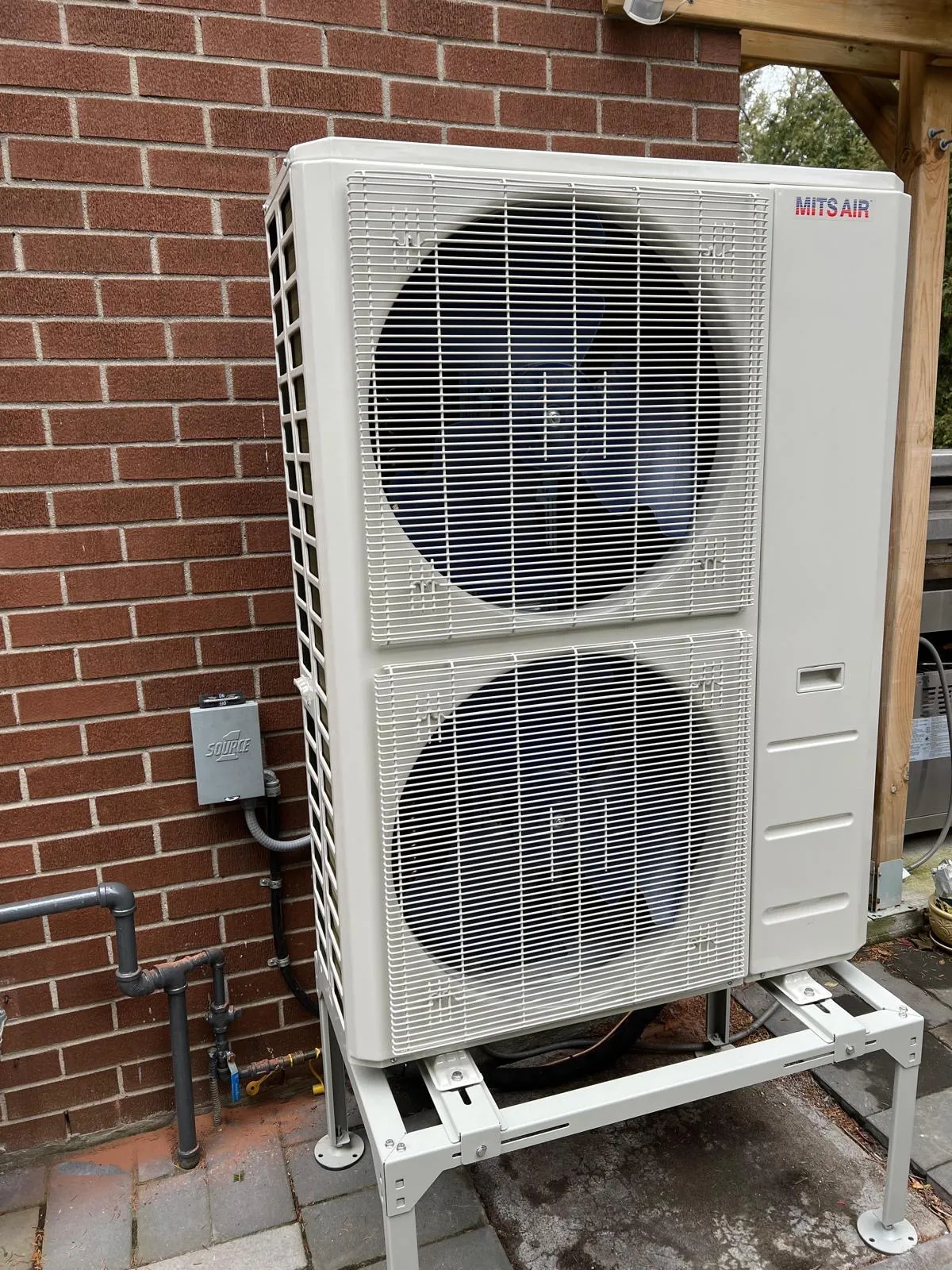
Heat Pump vs Furnace + AC: True 10-Year Cost of Ownership
Heat pump vs furnace + AC 10-year cost of ownership for GTA and Ontario homes: install, operating, maintenance, rebates, and lifetime totals compared in 2026.
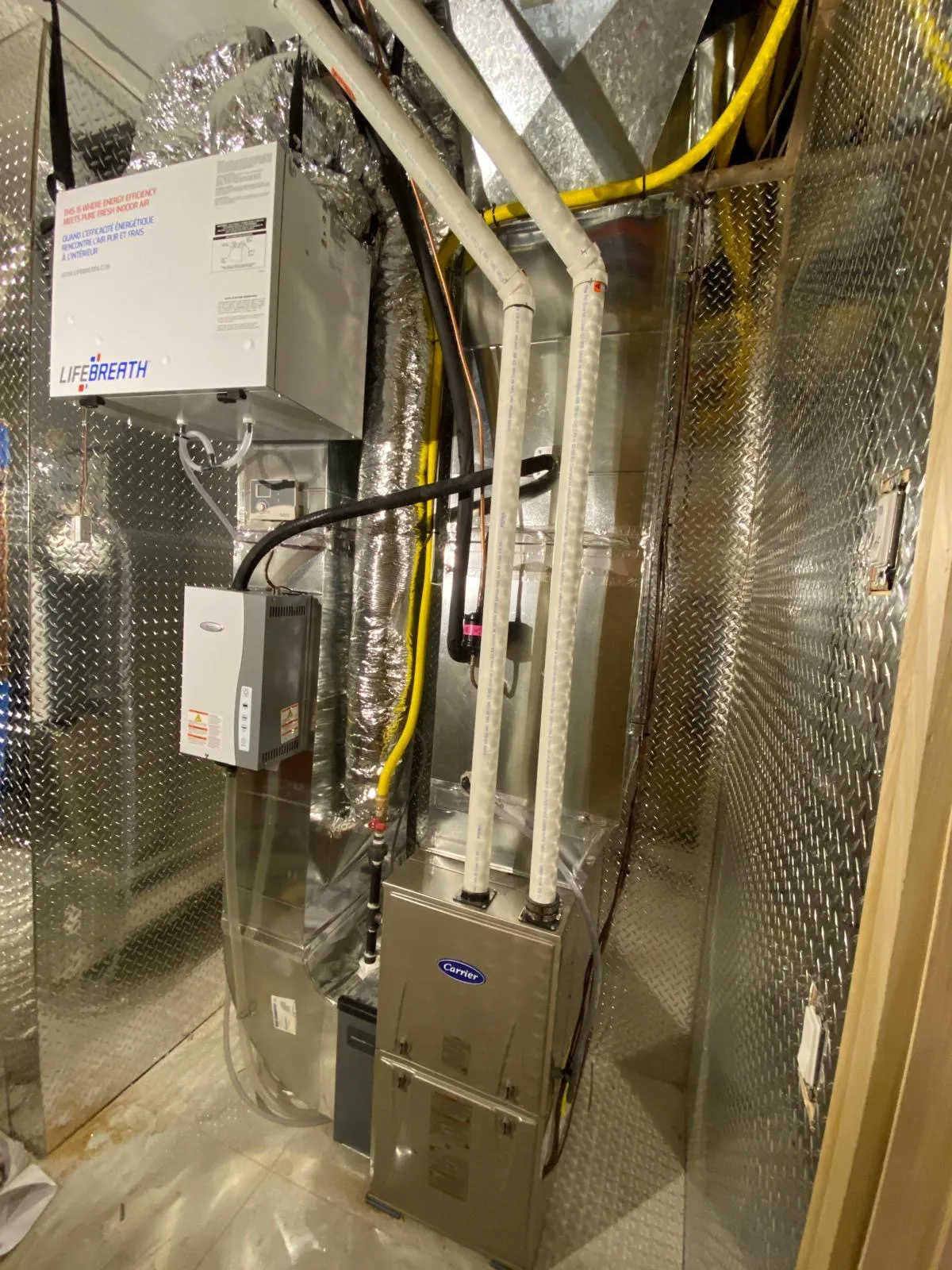
Programmable vs Smart Thermostats: 2026 Buyer's Guide
A 2026 buyer's guide comparing programmable and smart thermostats for GTA and Toronto homes — features, savings, compatibility, and which suits your Ontario HVAC system.
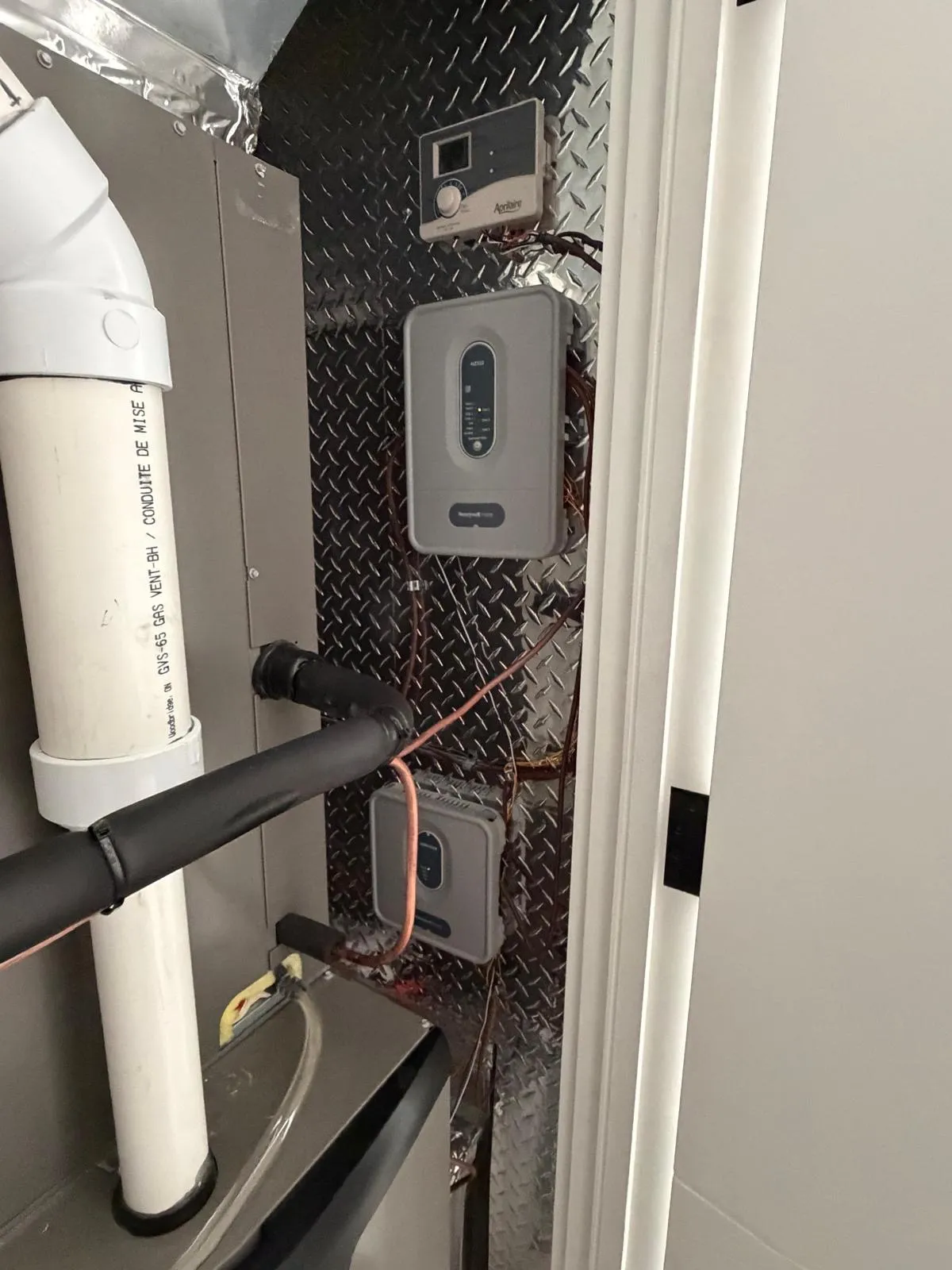
Tankless Water Heaters: Real GTA Costs in 2026
What does a tankless water heater really cost in Toronto and the GTA in 2026? Honest install ranges, tank vs tankless math, and what drives the bill.