Heat Pump Installation Cost in the GTA: Real Numbers for 2026
What does a heat pump really cost to install in Toronto and the GTA in 2026? Real price ranges, what drives the bill up or down, and how rebates change the math.
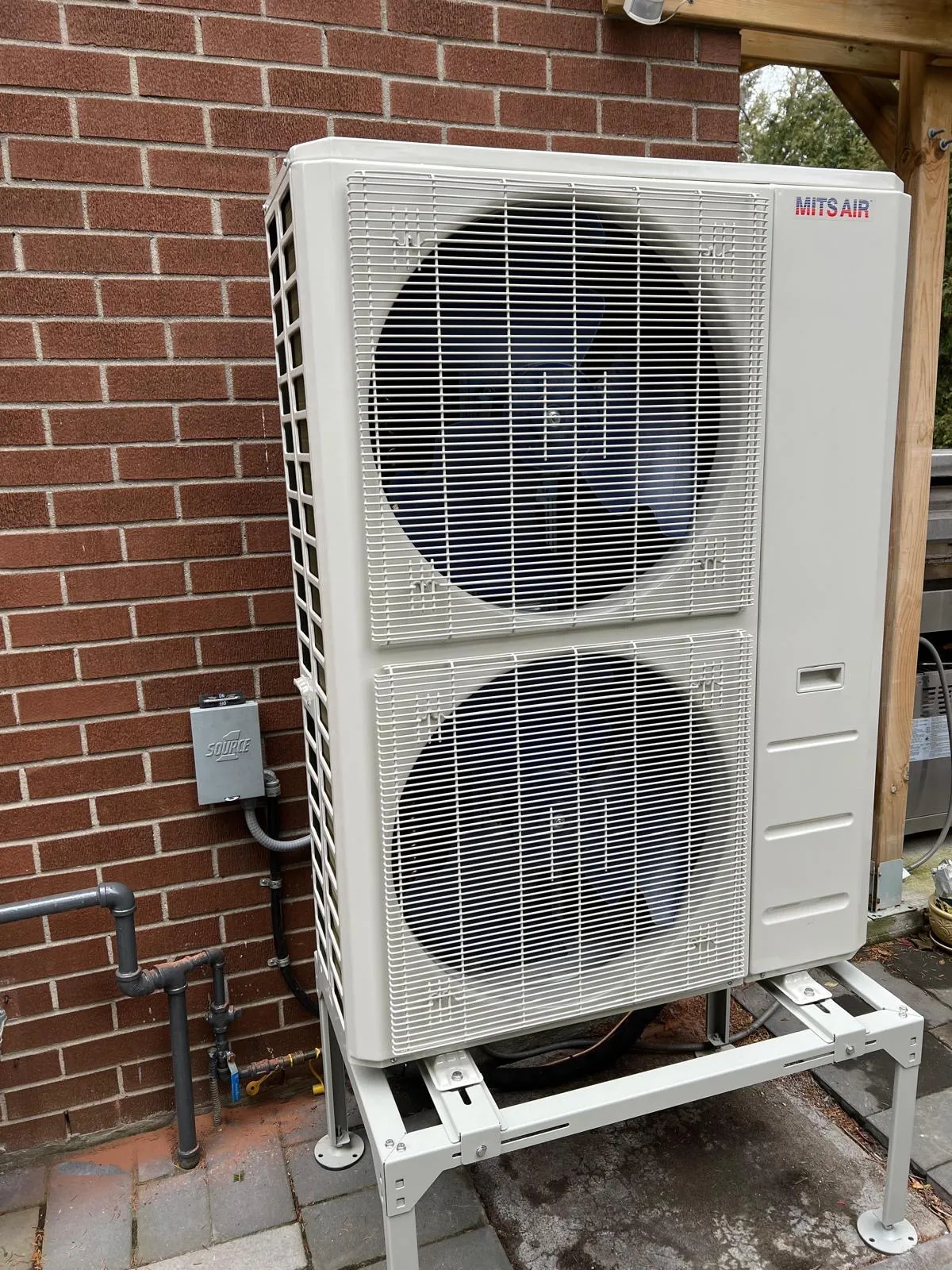
Heat pumps are the most talked-about HVAC upgrade in the Greater Toronto Area right now, and the first question every homeowner asks is the same: what is this actually going to cost me? Answers online range from “$6,000” to “$30,000”, which is not exactly helpful when you are trying to budget.
Here is the honest version, with the levers that move the number up or down, what rebates realistically take off the top in 2026, and where most GTA installs actually land.
The short version: A standard cold-climate air-source heat pump for a typical GTA home runs roughly $10,000–$18,000 installed as of 2026 before rebates. Bigger homes, ductless multi-zone systems, and electrical upgrades push it higher; smaller single-zone or simple swaps come in lower. Combined Ontario rebates can knock several thousand off, and a dual-fuel setup with your existing furnace often wins on total cost.
The 2026 price range, in plain numbers
There is no single “heat pump price” because heat pumps are not a single product. Capacity, configuration, brand tier, and the work your home needs all matter. That said, here is what we see on real GTA installs as of 2026.
| Configuration | Typical installed cost (2026, before rebates) | Best fit |
|---|---|---|
| Ducted cold-climate heat pump, 2–3 ton | $10,000 – $15,000 | Most 1,500–2,500 sq ft GTA homes with existing ducts |
| Ducted cold-climate heat pump, 3–5 ton | $13,000 – $18,000 | Larger or older homes, higher heat loss |
| Dual-fuel (heat pump + existing furnace) | $12,000 – $18,000 | Homes keeping a working gas furnace as backup |
| Ductless single-zone mini-split | $4,500 – $8,000 | Additions, basements, single rooms |
| Ductless multi-zone (3–5 heads) | $14,000 – $25,000 | Homes with no ducts or partial ducts |
Those ranges are all-in: equipment, labour, permits, a standard line-set, basic electrical, startup, and commissioning. They are not floor prices for the cheapest unit on a website — they reflect what a properly sized, properly installed system actually costs in the GTA in 2026.
What pushes the price up
A handful of factors do most of the work in moving you from the low end of those ranges to the high end.
- Capacity. Larger, leakier, or older homes need more tonnage, which means more expensive equipment.
- Cold-climate spec. A true cold-climate heat pump rated to perform at deep winter temperatures costs more than a builder-grade unit — and is the only kind we recommend for GTA winters.
- Electrical work. Many older GTA panels need an upgrade or a new dedicated circuit to feed a heat pump. That can add anywhere from a few hundred dollars to several thousand if a full panel upgrade is required.
- Ductwork changes. If your existing ducts are undersized for the airflow a heat pump needs, modifications may be required for the system to actually perform.
- Refrigerant line runs. Long or awkward runs between the outdoor unit and the indoor coil add labour and material.
- Brand and warranty tier. Premium inverter-driven units with longer warranties cost more upfront and tend to last longer and run quieter.
What keeps the price down
There are also legitimate ways the install lands at the lower end of the range without cutting corners.
- Good existing ductwork. If your ducts are properly sized and sealed, a ducted heat pump drops right in.
- Adequate electrical service. A modern 200-amp panel with available capacity avoids upgrade costs.
- Right-sized equipment. Bigger is not better with heat pumps — accurate sizing saves money and runs more efficiently.
- Keeping the existing furnace. A dual-fuel setup reuses your gas furnace as backup instead of adding electric resistance heat, which can lower both install and operating costs.
A heat pump quote that comes in dramatically below the ranges above is usually missing something — permits, electrical, a real cold-climate unit, or proper commissioning. Cheap installs cost more later. Ask exactly what is included.
How rebates change the math in 2026
This is where the sticker price stops telling the whole story. As of 2026, qualifying cold-climate heat pump installs in Ontario can stack federal and provincial incentives, plus low-interest financing for eligible homeowners. The combined value can take several thousand dollars off the upfront cost when you qualify.
Eligibility typically depends on:
- The equipment meeting cold-climate performance criteria.
- An approved energy audit, before and sometimes after the install.
- The work being completed by a licensed contractor.
- The home being your primary residence.
Programs and amounts shift over the year, so do not budget around a number you saw on a blog post in January. We keep our Ontario HVAC rebates guide current, and we walk every customer through what they actually qualify for before they commit.
Operating cost: the other half of the picture
Install cost is one column on the spreadsheet. The other is what the system costs you to run for the next 15 years. A heat pump that costs more to install but less to operate can be the cheaper choice over its lifetime — especially when paired with a gas furnace in deep cold.
| Scenario | Install cost | Heating operating cost (relative) |
|---|---|---|
| New high-efficiency gas furnace only | Lower | Steady; tied to gas prices |
| Cold-climate heat pump only (with electric backup) | Higher | Lower in mild weather, higher in deep cold |
| Dual-fuel: heat pump + gas furnace | Highest | Lowest overall across the GTA’s mixed climate |
For most GTA homes with a working furnace, dual-fuel is the sweet spot: the heat pump handles the long shoulder seasons efficiently, and the furnace kicks in only when it has to.
Getting a real quote (not a guess)
A proper heat pump quote is not a number a salesperson rattles off over the phone. It comes from a load calculation on your specific home — square footage, insulation, windows, orientation, and existing ducts. Anyone quoting a flat price without seeing your home is guessing.
When we visit a home for a heat pump assessment, we look at:
- Heat loss and heat gain for accurate sizing
- Existing duct condition and static pressure
- Electrical panel capacity and circuit availability
- Outdoor placement, clearances, and noise considerations
- Whether dual-fuel makes sense given your current furnace
You get a written quote that lists the equipment, the work, the permits, and what you can expect from rebates. No mystery line items.
When to call Delson Air
If you are weighing a heat pump in Toronto, Mississauga, Markham, Vaughan, Brampton, Richmond Hill, Oakville, or anywhere across the GTA, Delson Air can give you the real numbers for your home — not a generic price range. We are licensed, insured, TSSA-licensed, and an Enbridge Authorized Contractor, so we handle the gas-side work on dual-fuel installs in-house and submit your rebate paperwork correctly the first time.
Call us at (647) 467-9919, email info@delsonair.ca, or book a no-pressure assessment through our contact page. See all our services for everything we cover — your comfort is our priority.
FAQ
Common questions
What is the typical all-in cost to install a heat pump in the GTA in 2026?
How much do Ontario rebates actually take off the price?
Is a ductless or ducted heat pump cheaper to install?
Does a dual-fuel setup cost more than heat-pump-only?
Delson Air Team
Licensed, insured, TSSA-certified HVAC technicians serving the Greater Toronto Area.
Keep reading
More from the Journal
Heat Pump vs Furnace + AC: True 10-Year Cost of Ownership
Heat pump vs furnace + AC 10-year cost of ownership for GTA and Ontario homes: install, operating, maintenance, rebates, and lifetime totals compared in 2026.
Programmable vs Smart Thermostats: 2026 Buyer's Guide
A 2026 buyer's guide comparing programmable and smart thermostats for GTA and Toronto homes — features, savings, compatibility, and which suits your Ontario HVAC system.
Tankless Water Heaters: Real GTA Costs in 2026
What does a tankless water heater really cost in Toronto and the GTA in 2026? Honest install ranges, tank vs tankless math, and what drives the bill.