Programmable vs Smart Thermostats: 2026 Buyer's Guide
A 2026 buyer's guide comparing programmable and smart thermostats for GTA and Toronto homes — features, savings, compatibility, and which suits your Ontario HVAC system.
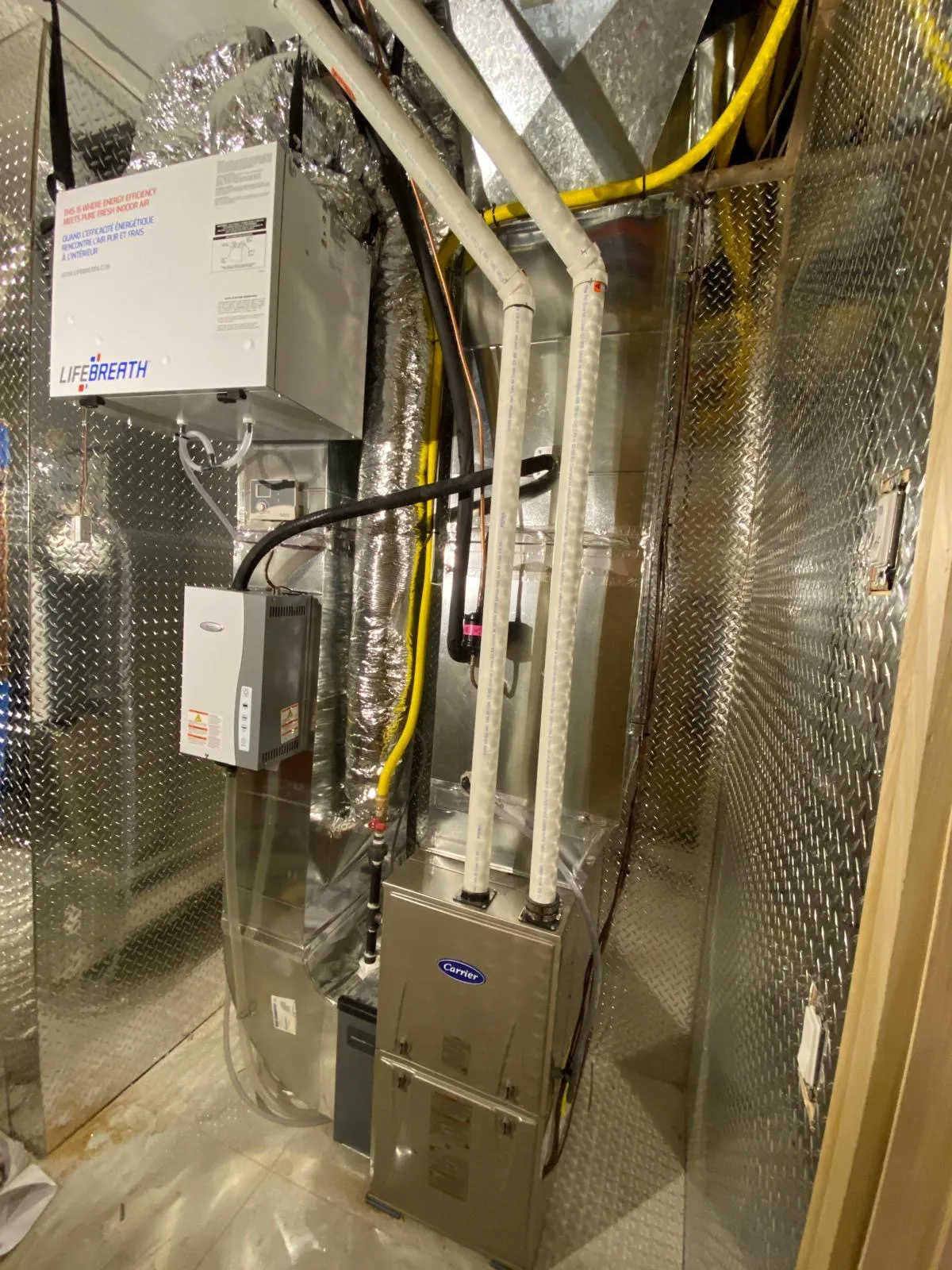
If your thermostat is older than your kids, it’s almost certainly costing you money — and comfort. The control that decides when your furnace, heat pump, or AC runs has more impact on your monthly bill than most homeowners realise. In a GTA climate that runs from -20 C in February to humid 30 C heat in July, the right thermostat earns its keep fast.
The question we get most often isn’t “should I upgrade?” — it’s “do I need a smart thermostat, or will a good programmable do the job?” The honest answer depends on your equipment, your habits, and how much you’ll actually fiddle with it.
The short version: A modern programmable thermostat is a real upgrade over a basic dial, but it only saves money if you actually program it. A smart thermostat schedules itself, learns your patterns, and pairs well with heat pumps and two-stage equipment. For most GTA homes — especially with a heat pump or variable-speed furnace — go smart. See our forthcoming pick of the best smart thermostats for 2026 and stack it with any open HVAC rebates in Ontario.
What each type actually does
A programmable thermostat lets you set different temperatures for different times of day — typically a weekday/weekend schedule, sometimes a 7-day schedule. It is a manual tool. You decide the times, you decide the temperatures, and you reprogram it when life changes.
A smart thermostat does everything a programmable does, plus it connects to Wi-Fi. That unlocks remote control through an app, learning algorithms that build a schedule from your behaviour, occupancy sensing, HVAC runtime reports, integration with room sensors, and (sometimes) connections to utility demand-response programs.
The shorthand: programmable is a better clock. Smart is a small computer that happens to control your furnace.
Real-world savings — what to expect
This is where marketing gets out of hand. We hedge intentionally here because savings vary widely by home, schedule, and how aggressively you use setbacks.
Independent estimates for smart thermostats typically land in the rough range of 8–15% on heating and cooling, depending on the source and the baseline. Programmable thermostats, used properly, can deliver similar numbers — but studies have repeatedly found that most homeowners either never set them or override them so often that real-world savings collapse toward zero.
In other words: a smart thermostat tends to save money even when you ignore it. A programmable saves money only if you don’t.
If your current thermostat is a basic mercury or non-programmable dial, either upgrade will likely pay back faster than you expect. The bigger gains come from the first jump, not the last one.
Compatibility — the part that trips people up
This is the section to read twice. The fanciest thermostat in the world is useless if it can’t drive your equipment correctly.
| Equipment type | Basic programmable | Smart thermostat | Notes |
|---|---|---|---|
| Single-stage gas furnace + AC | Works with almost any model | Works with almost any model | The most forgiving setup; both options are fine |
| Two-stage or variable-speed furnace | Many low-end units only drive stage 1 | Most major brands support full staging | Look for “two-stage” support explicitly; see furnace service |
| Air-source heat pump | Often poor — limited or no heat-pump logic | Strong on Ecobee, Honeywell T-series, Mysa mini-split | Confirm staging and auxiliary heat support; see heat pump service |
| Dual-fuel (heat pump + gas backup) | Rarely supported | Supported on select smart models | Needs proper outdoor temperature lockout settings |
| Hydronic / boiler / in-floor | Some compatible | Some compatible (e.g. Ecobee, Honeywell line-voltage) | Often needs a specific model — don’t assume |
| Electric baseboard / line-voltage | Limited models | Mysa and a few others | Most low-voltage thermostats won’t work at all |
The single biggest mistake we see is a homeowner buying a thermostat off a shelf, assuming it’ll work because the box says “compatible with most systems,” then discovering their two-stage furnace runs only on low fire all winter. Always cross-check the manufacturer’s compatibility tool against your exact model number before buying.
The C-wire question in older GTA homes
Many homes across Toronto, Mississauga, and the older inner suburbs were wired in an era when thermostats didn’t need constant power. They have four wires at the wall and no C (common) wire. Most smart thermostats — and a surprising number of higher-end programmables — need that constant 24V power to run a Wi-Fi radio and a screen.
You have a few options:
- Run a new cable from the furnace to the thermostat. Cleanest solution, but it means opening walls.
- Use a power extender module (PEK) at the furnace board. Ecobee includes one in most boxes; Honeywell offers a similar kit.
- Use an add-a-wire adapter that repurposes an existing wire. Works on many setups but not all.
- Choose a thermostat that doesn’t need a C-wire (Nest will run without one in many configurations, with trade-offs).
None of these are hard for a qualified technician. All of them are easy to get wrong without one. Miswiring a control board is an expensive mistake.
When a programmable still makes sense
Smart isn’t automatically the right answer. A solid 7-day programmable can be the better pick when:
- The home is a rental or seasonal property where Wi-Fi is unreliable or absent.
- The homeowner genuinely won’t use an app and just wants a reliable schedule.
- The equipment is a basic single-stage furnace and AC with no plans to upgrade to a heat pump.
- Budget is tight and the existing thermostat is dead — a good programmable runs roughly $40–$90 CAD versus $150–$330 for a smart unit.
If any of those describe you, a Honeywell or Emerson 7-day programmable from a reputable supplier will serve you well for years.
When to go smart
For most GTA homeowners in 2026, we lean toward smart, especially if:
- You have or are planning a heat pump or two-stage system.
- You travel, work shifts, or have an irregular schedule.
- You want room sensors to fix uneven heating between floors.
- You’re stacking upgrades for a rebate and want HVAC runtime data to verify performance.
- You already live in your phone — the app actually gets used.
The energy savings alone don’t always justify the gap over a well-used programmable. The comfort and visibility usually do.
Installation — DIY or call a pro
Many homeowners successfully install smart thermostats on straightforward forced-air systems with a C-wire already present. If that’s you, follow the manufacturer’s wiring diagram, take a photo of the existing wiring before you disconnect anything, and turn power off at the furnace breaker — not just the switch.
If your system is a heat pump, dual-fuel, two-stage, hydronic, or anything with unclear labels at the thermostat, get a licensed contractor to do it. The cost of a service call is far less than the cost of a damaged control board or an HVAC system that runs hot and cold for a season because the staging logic was set up wrong.
When to call Delson Air
Choosing the right thermostat is a small decision with a long shadow. If you’d like help matching the right thermostat to your furnace, heat pump, or two-stage system — or you’d like a clean install with the wiring and staging set up properly the first time — Delson Air is here for the GTA. We’re licensed, insured, TSSA-certified, and an Enbridge Authorized Contractor, and we install and configure all major thermostat brands across Toronto, Mississauga, Markham, Vaughan, and surrounding cities. See our full services list, call (647) 467-9919, or contact us for a straight answer about what fits your home.
FAQ
Common questions
Is a smart thermostat worth the extra cost over a programmable one in the GTA?
Will a programmable or smart thermostat work with my heat pump?
Do I need a C-wire for a smart thermostat in an older GTA home?
Can I still get a rebate for installing a smart thermostat in Ontario?
Delson Air Team
Licensed, insured, TSSA-certified HVAC technicians serving the Greater Toronto Area.
Keep reading
More from the Journal
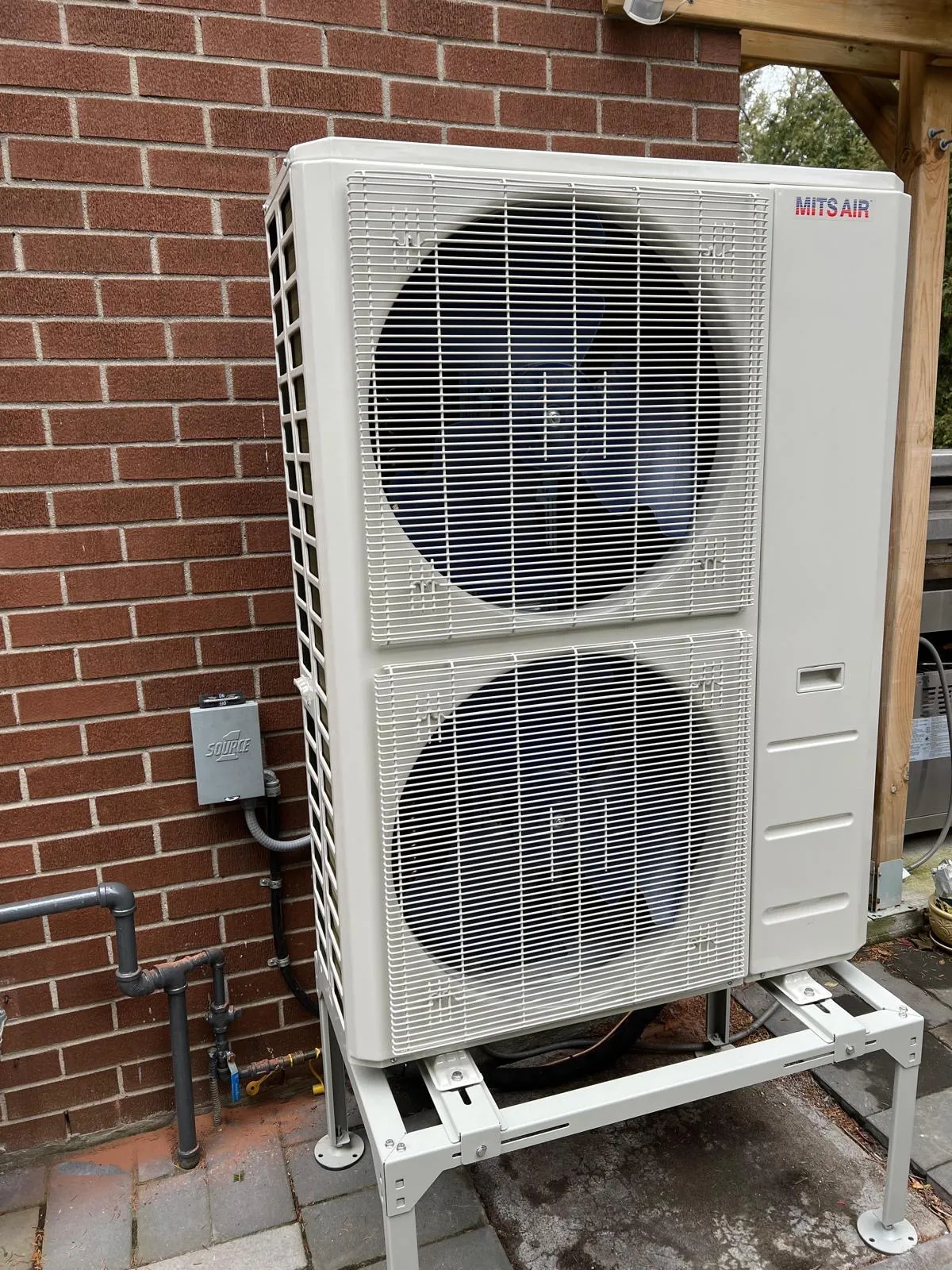
Heat Pump vs Furnace + AC: True 10-Year Cost of Ownership
Heat pump vs furnace + AC 10-year cost of ownership for GTA and Ontario homes: install, operating, maintenance, rebates, and lifetime totals compared in 2026.
Tankless Water Heaters: Real GTA Costs in 2026
What does a tankless water heater really cost in Toronto and the GTA in 2026? Honest install ranges, tank vs tankless math, and what drives the bill.
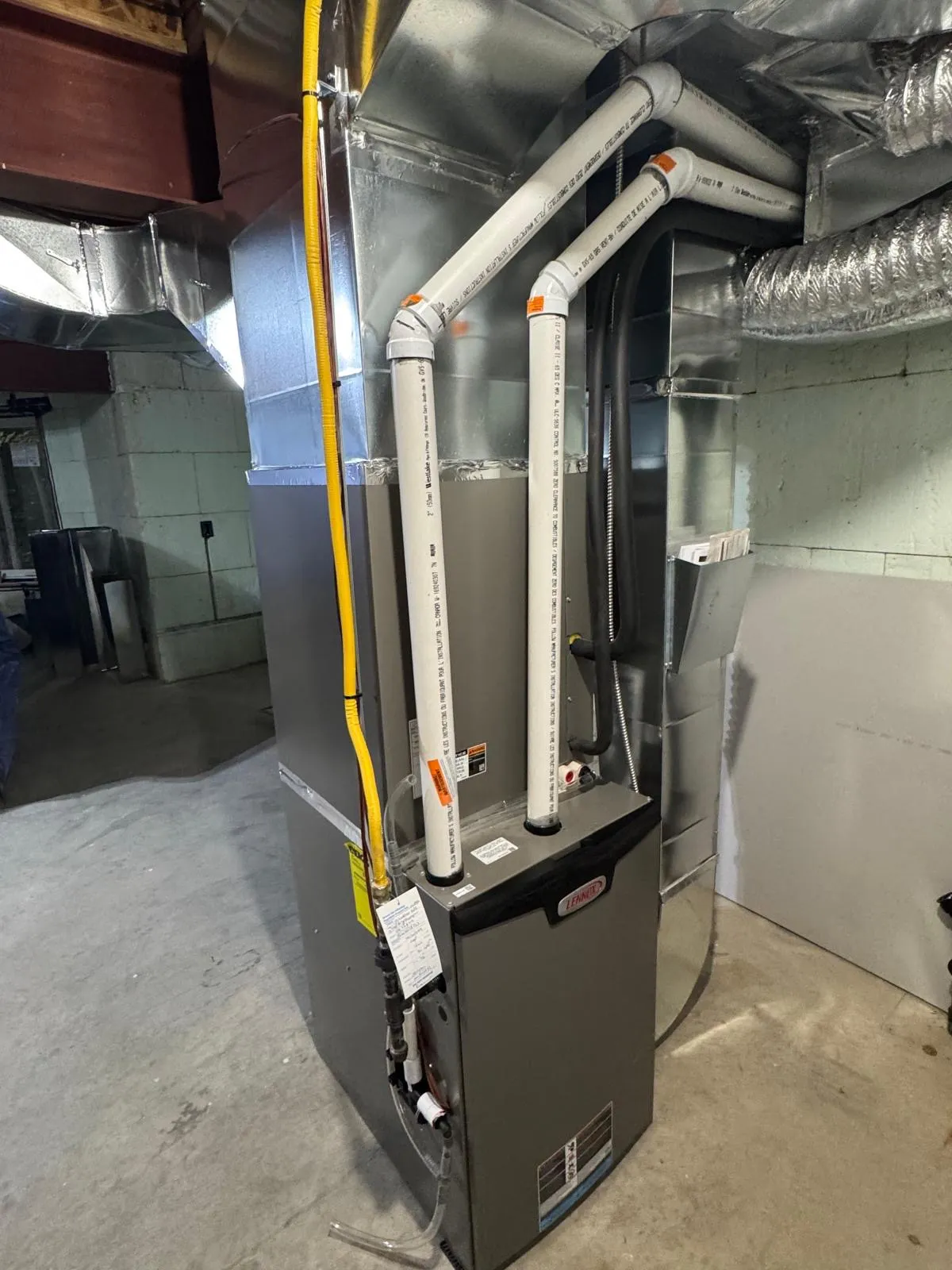
AFUE Explained: Understanding Furnace Efficiency Ratings
AFUE explained for GTA homeowners: what furnace efficiency ratings mean, how 80% mid-efficiency compares to 96% high-efficiency, and what to pick in Ontario in 2026.