

Linear vs Traditional Gas Fireplaces: A Designer's Guide
Linear vs traditional gas fireplaces for GTA and Toronto homes: compare design, heat output, venting, costs, TV-pairing, and which style fits your renovation.
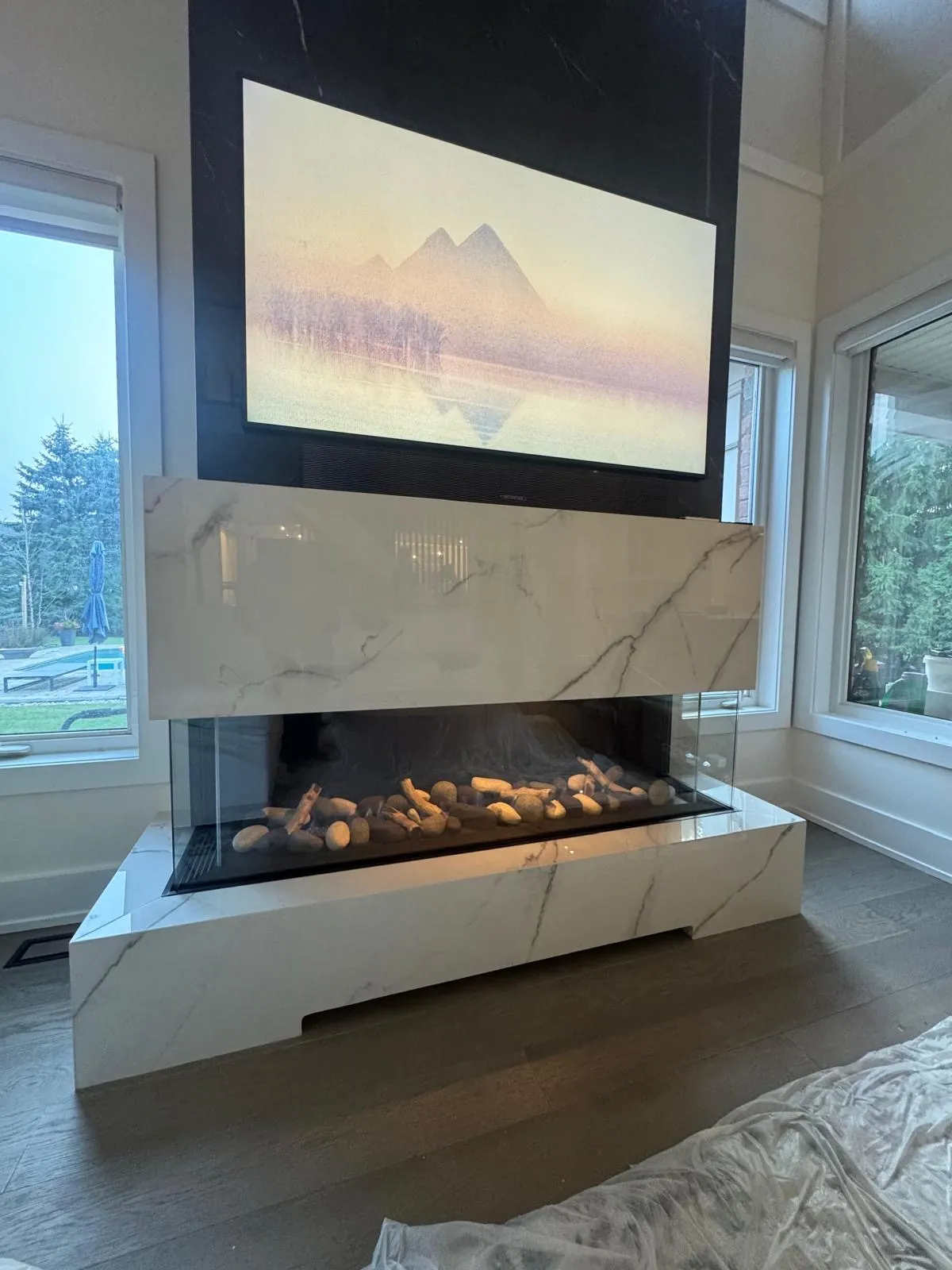
A fireplace is one of the few HVAC decisions you make almost entirely with your eyes. Furnaces hide in a mechanical room; fireplaces become the visual anchor of the room they sit in. So when GTA homeowners ask us to spec a new gas fireplace, the very first question isn’t BTU or efficiency — it’s linear or traditional?
The answer matters more than people think. The two styles look different, heat differently, vent differently, and pair with very different room layouts. Get the match right and the fireplace makes the room. Get it wrong and you’ve spent five figures on a feature that fights the architecture.
The short version: A traditional gas fireplace gives you the classic tall, deep flame and stronger radiant heat — ideal for cozy, transitional rooms. A linear gas fireplace gives you a long, low ribbon of flame that suits modern, minimalist interiors and TV-over-fireplace designs. Both can be sealed direct-vent units. Choose based on the room’s style, viewing angles, and whether you also want it as a serious heat source.
What “linear” actually means
A linear gas fireplace is defined by its proportions. The viewing opening is wide and short — typically two to six feet long and around twelve to eighteen inches tall. The flame runs as a continuous ribbon along a bed of crushed glass, stones, or stylised logs.
A traditional gas fireplace is closer to a square — roughly as tall as it is wide. The firebox is deeper, the flame is taller, and the inside often mimics a real wood-burning hearth with ceramic logs, a refractory brick liner, and a defined “back wall”.
Both are usually direct-vent appliances. That means a sealed glass front, outside combustion air, and a coaxial vent through the wall or roof. That sealed design is non-negotiable in modern GTA installs — it’s safer, more efficient, and required for almost all new construction.
Design language: where each one belongs
Style is where the two diverge most. A linear unit reads contemporary almost no matter what you do around it. Even with a stone surround, the proportions push the room modern. A traditional unit reads classic, transitional, or rustic depending on the surround — but it rarely reads ultra-modern.
Here’s how we typically match style to space:
| Style | Best in… | Typical surround | Mantel? |
|---|---|---|---|
| Linear | Modern open-concept living rooms, primary bedrooms, basements with low ceilings | Porcelain slab, large-format tile, blackened steel | Often no mantel — clean wall above |
| Traditional | Transitional family rooms, cottage-style homes, formal sitting rooms | Stacked stone, brick, painted millwork | Almost always with a mantel |
| Either | Great rooms with double-height ceilings | Floor-to-ceiling stone or plaster | Designer’s call |
Where the TV goes
This is the question that really drives the decision in 2026. A linear fireplace, mounted lower on the wall, leaves a clean rectangle above for a TV — and many linear models are explicitly engineered with cooler outer surfaces to support that layout. A traditional fireplace has a taller flame and a hotter mantel zone, which usually pushes the TV uncomfortably high or onto a different wall.
If a wall-mounted TV is non-negotiable, linear almost always wins.
Heat output and how the room actually feels
Both styles can be specified at similar BTU ratings — roughly 20,000 to 40,000 BTU/h is the common range for a residential gas fireplace. But the feel is different.
A traditional unit concentrates its heat through a smaller, deeper firebox. The radiant heat punches forward into the room. Sit on the couch six feet away and you feel it on your face. That makes it excellent for zone heating in a finished basement or a chilly family room.
A linear unit spreads the same heat across a much wider opening, so radiant intensity at any single point is lower. It’s still a real heat source — many homeowners use one to take the chill off a great room — but it works more like a wide, gentle warmer than a focused fireplace.
A gas fireplace is a supplemental heat source. It is not designed to replace your furnace, and most should not be left running for hours unattended. Always follow the manufacturer’s operating instructions and have it serviced annually by a licensed technician.
Venting, sizing, and where it can go
This is the part homeowners under-estimate. The appliance is only half the project — the vent path and gas line decide what’s actually buildable. A direct-vent fireplace needs to run a coaxial pipe to an exterior wall or roof termination, respecting clearance to windows, soffits, decks, and property lines.
A few practical realities for GTA homes:
- Linear units often allow more flexible terminations, including longer horizontal runs, because they’re designed around modern wall layouts.
- Traditional units in older Toronto homes can sometimes reuse an existing masonry chimney with an insert and liner, which saves the cost of cutting a new vent path.
- Both require a properly sized gas line from the meter. A long pipe run from a small meter is a real constraint and is often what dictates the maximum BTU you can actually install.
- Condo and infill projects may have strata or builder restrictions on roof and wall penetrations. Check before you commit to a model.
We work through all of this during the site visit — it’s the only way to give an honest quote.
What it costs in the GTA (as of 2026)
Costs vary widely with the model, the surround, and how much carpentry, electrical, and gas work is involved. As a rough guide for installed, finish-ready projects in the GTA:
| Project | Typical installed range (CAD) |
|---|---|
| Traditional direct-vent gas fireplace, basic surround | $5,500 – $9,000 |
| Linear direct-vent gas fireplace, basic surround | $7,500 – $13,000 |
| Either style with a custom floor-to-ceiling stone or slab surround | $12,000 – $25,000+ |
| Gas-line extension or new exterior vent path | $1,000 – $3,500 (add) |
Those are ballpark ranges, not quotes — every home is different. A few line items are easy to under-budget: a gas-line upsize, structural blocking for the TV, electrical for the blower, and the finished millwork or stonework on top.
How to choose, in plain English
A short decision shortcut after years of doing these installs in the GTA:
- Is the room modern, or do you want it to be? Lean linear.
- Do you want a serious radiant heat source for one spot? Lean traditional.
- Is a wall-mounted TV part of the plan? Strongly lean linear.
- Is this a heritage or transitional space with a mantel? Lean traditional.
- Are you restoring an existing masonry chimney? A traditional insert usually fits best.
There is no universally “better” option. There is only the right match for your room, your sightlines, and how you’ll actually use it. Browse our gallery for examples of both styles installed in real GTA homes.
When to call Delson Air
If you’re planning a renovation or new build in Toronto, Mississauga, Markham, Vaughan, Brampton, Richmond Hill, Oakville, or anywhere across the GTA, Delson Air can help you spec, supply, and install the right gas fireplace for the room. As a TSSA-licensed and Enbridge Authorized Contractor, we handle the appliance, the venting, the gas-line work, and the safety sign-off as one job — and we coordinate cleanly with your designer, builder, or trim carpenter.
See our fireplaces service page for the full scope, or call us at (647) 467-9919 for a no-pressure consultation. You can also reach us through our contact page or browse the rest of our services to see how the fireplace fits into your broader home-comfort plan. Your comfort is our priority.
FAQ
Common questions
Which gives off more heat — a linear or a traditional gas fireplace?
Can I really mount a TV above a linear gas fireplace?
Do linear fireplaces cost more than traditional ones in Ontario?
Are gas fireplaces still allowed in new GTA builds?
Delson Air Team
Licensed, insured, TSSA-certified HVAC technicians serving the Greater Toronto Area.
Keep reading
More from the Journal
Why Furnaces Fail in October: GTA Pre-Winter Warning Signs
October is when GTA furnaces fail most. Learn the pre-winter warning signs Toronto and Mississauga homeowners should catch before the first hard freeze.

Carbon Monoxide Safety: Why GTA Homes Need an Annual Furnace Check
Carbon monoxide is invisible, odourless, and produced by every gas furnace in the GTA. Here's how an annual furnace check keeps your Toronto-area home safe.

Hydronic Heating: Is It Right for Your Older GTA Home?
Is hydronic heating right for an older Toronto or GTA home? Compare radiator retrofits, in-floor retrofits, condensing boilers, costs, and Ontario climate fit.