Why Furnaces Fail in October: GTA Pre-Winter Warning Signs
October is when GTA furnaces fail most. Learn the pre-winter warning signs Toronto and Mississauga homeowners should catch before the first hard freeze.
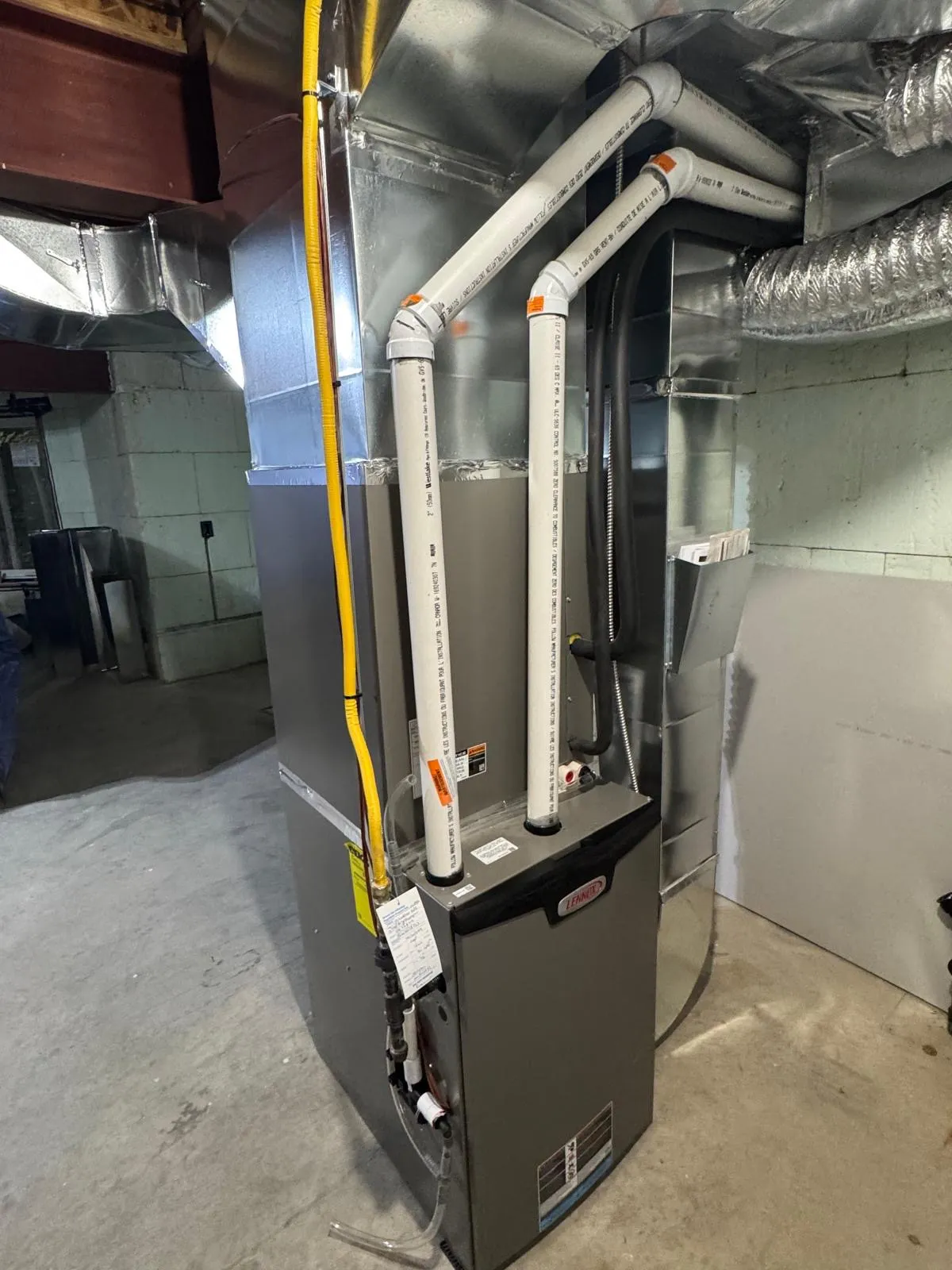
Every fall, the same pattern plays out across the GTA. The first overnight low dips toward freezing, thermostats click on, and within 48 hours the phones at every HVAC company in Toronto, Mississauga, and Vaughan light up. October is, statistically and operationally, the busiest month for furnace breakdowns in Ontario.
The good news: most of those October failures send up warning flares in September. If you know what to look for — and book service before the rush — you can usually avoid a cold-house emergency call at 11 p.m. on a Tuesday.
The short version: GTA furnaces fail in October because they’ve sat idle all summer and the first real cold reveals every weak link — dirty burners, a tired igniter, a clogged filter, a failing inducer. Watch for short-cycling, odd smells, weak airflow, and strange noises in early fall. Book a fall tune-up or, if the furnace already won’t start, see our guide on a furnace that won’t turn on before calling for service.
Why October is the worst month for furnaces
A furnace that hasn’t run since April is essentially a sealed metal box full of dust, spider webs, and slowly aging components. The first time it cycles on after summer, it’s working through:
- Dust burn-off on the burners and heat exchanger.
- Stiff bearings in the inducer and blower motors that have sat still for months.
- A degraded hot-surface igniter that may have been on its last legs in March.
- A filter the homeowner forgot about back in spring.
On a mild September afternoon, the furnace might run for ten minutes a day and limp through. But the first October night that hits 2 C demands an hour-long heating cycle, and that’s when weak components actually fail.
The second problem is queue length. By mid-October every reputable HVAC company in the GTA is booked solid. A fix that takes two hours in September can take three days to schedule in October — and those are three cold days for your family.
The seven pre-winter warning signs to catch in September
These are the symptoms our technicians see most often in the weeks before the first freeze. Any one of them is worth a service call now, not later.
1. Short-cycling on the first cool nights
The furnace fires, runs for a minute or two, then shuts down before the thermostat is satisfied. Causes range from a dirty flame sensor to an overheating limit switch to incorrect gas pressure. All are fixable, but none get better on their own.
2. A burning-dust smell that won’t go away
A faint dusty smell on the first cycle of the season is normal — that’s literally summer dust burning off the heat exchanger. If the smell persists into the second or third cycle, or smells acrid or electrical, shut the system off and book service.
3. Yellow or flickering burner flames
Healthy gas burners produce steady, mostly blue flames. Yellow, orange, or wavering flames suggest incomplete combustion, which can mean a dirty burner, poor draft, or — more seriously — a cracked heat exchanger. This is a carbon monoxide concern.
4. Longer startup or repeated ignition attempts
You can hear it: the inducer spins up, the igniter glows, gas should hit — but the burners don’t catch on the first try. Modern furnaces will retry two or three times before locking out. A weak igniter, dirty flame sensor, or low gas pressure is usually behind it.
5. Strange new noises
A new bang, rattle, squeal, or grinding sound is the furnace asking for help. We have a full breakdown in our guide on what furnace noises actually mean, but the short answer is: don’t ignore any sound that wasn’t there last winter.
6. Weak airflow at the registers
Hold your hand over a register during a heating cycle. If the air feels thin or barely warm compared to last year, the blower may be struggling, the filter may be clogged, or a duct may have come apart over the summer.
7. A thermostat that disagrees with the room
If the thermostat reads 21 C but the room feels 18 C, either the thermostat is failing, it’s poorly located, or the furnace isn’t moving enough heat. All worth checking before you really need the system.
A quick GTA pre-winter readiness table
Here’s the realistic window for each task, and roughly what you’ll pay in 2026 dollars across the GTA.
| Task | Best window | Typical GTA cost (CAD) | Who does it |
|---|---|---|---|
| Replace furnace filter | Sept, then every 1–3 months | $15–$60 per filter | Homeowner |
| Annual furnace tune-up | Late Aug – early Oct | Roughly $150–$250 | Licensed tech |
| Test CO detectors / change batteries | September | $0 if working, $40–$80 new | Homeowner |
| Clean return-air grilles & vents | September | $0 | Homeowner |
| Inspect / clean humidifier | Before first run | $80–$150 added to tune-up | Tech |
| Bleed boiler / check pressure | September | Included in tune-up | Tech |
| Diagnose any new symptom | Immediately | $120–$180 service call | Tech |
Numbers are typical ranges as of 2026 — they shift with the unit, the home, and parts availability.
What a real fall tune-up actually includes
A “tune-up” should never be a five-minute look-and-leave. A proper visit on a forced-air gas furnace takes 60–90 minutes and includes:
- Checking and adjusting manifold gas pressure.
- Cleaning the flame sensor and inspecting the hot-surface igniter.
- Inspecting the heat exchanger for cracks or corrosion.
- Measuring blower motor amp draw against spec.
- Verifying inducer motor operation and draft pressure.
- Checking flue and venting for blockage or corrosion.
- Taking a combustion analysis reading — CO, CO2, and O2 in the flue.
- Replacing or recommending a new filter.
- Confirming the thermostat is calling and cycling correctly.
If a contractor quotes a $59 “tune-up” with no detail, you’re getting a filter change and a sales pitch. A real tune-up is closer to $150–$250 in the GTA and tells you whether your furnace will make it through January.
Safety note: if you do not have a working CO detector on every floor of your home, install them before you fire up the furnace this fall. They are required by Ontario law in any home with a fuel-burning appliance or attached garage, and they save lives every winter.
When repair stops making sense
Most furnaces in the GTA last 15 to 20 years. Past year 15, the math shifts. If you’re facing a repair quote north of $1,000 on a 17-year-old unit, replacement is usually the smarter spend — newer condensing furnaces routinely run at 96–98% AFUE versus 60–80% on older mid-efficiency models, and Enbridge plus federal rebates can knock real money off the upgrade.
We always quote both options when it’s close. No one needs a sales push when their house is cold; they need honest numbers and a working furnace tomorrow.
For a deeper fall walk-through, we’ll be publishing a full fall HVAC maintenance checklist for Ontario — covering furnace, humidifier, ducts, and thermostat in one go.
When to call Delson Air
If your furnace is showing any of the warning signs above, or you simply want a proper pre-winter tune-up before the GTA rush hits, this is exactly what we do. Delson Air is a licensed, insured, TSSA-licensed and Enbridge Authorized Contractor serving Toronto, Mississauga, Markham, Vaughan, Brampton, Richmond Hill, Oakville, and surrounding communities. Our furnace service page covers what’s included, or you can book directly through our contact page or call us at (647) 467-9919. Catch the small stuff in September and you’ll be the household on the block with heat the night it first drops below zero — see our furnace services to get started.
FAQ
Common questions
Why do so many furnaces break down in October?
What is the first sign my furnace is about to fail?
Should I get a furnace tune-up every year?
Is it cheaper to repair an old furnace or replace it?
Delson Air Team
Licensed, insured, TSSA-certified HVAC technicians serving the Greater Toronto Area.
Keep reading
More from the Journal

Carbon Monoxide Safety: Why GTA Homes Need an Annual Furnace Check
Carbon monoxide is invisible, odourless, and produced by every gas furnace in the GTA. Here's how an annual furnace check keeps your Toronto-area home safe.

Hydronic Heating: Is It Right for Your Older GTA Home?
Is hydronic heating right for an older Toronto or GTA home? Compare radiator retrofits, in-floor retrofits, condensing boilers, costs, and Ontario climate fit.

Fireplace Installation in Etobicoke and West Toronto
Planning a fireplace install in Etobicoke or West Toronto? A licensed GTA guide to gas inserts, venting, permits, older-home retrofits, costs, and what to expect.