Summer Indoor Humidity Levels: Comfort Guide for GTA Homes
What ideal summer indoor humidity looks like for Toronto and GTA homes, why 30–50% is the comfort sweet spot, and how your AC and dehumidifier get you there.
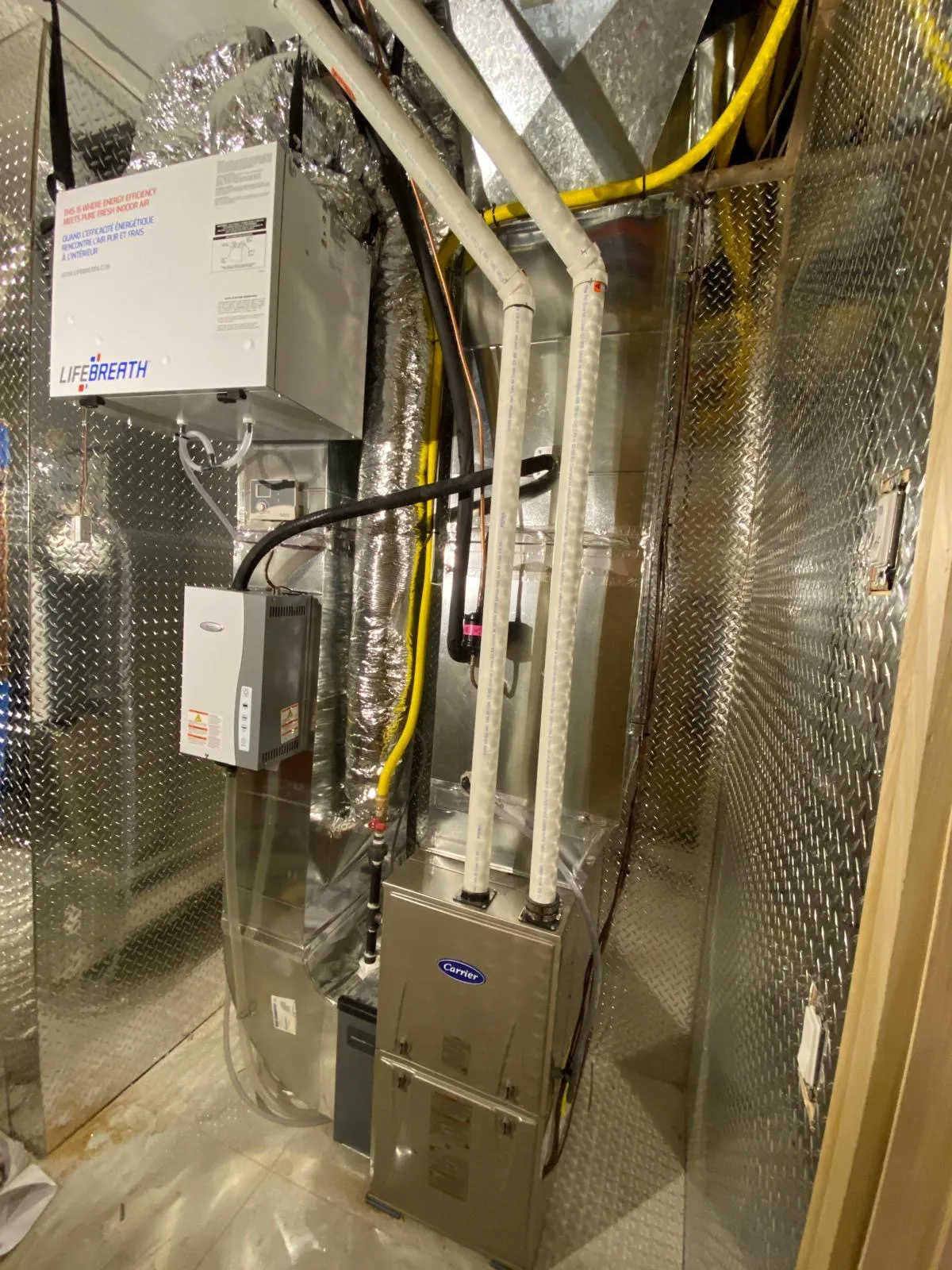
The first heavy, muggy week of July tells you everything you need to know about Ontario summers. The thermostat says 23 °C — perfectly reasonable on paper — but the house feels heavier than that. Sheets feel damp at bedtime, the basement smells a little musty, and the air conditioner runs and runs without really making things comfortable.
That gap between the temperature on the dial and how the air actually feels almost always comes down to one thing: humidity. Get it into the right range and a GTA summer becomes genuinely pleasant indoors. Leave it alone, and even an oversized AC can’t save you.
The short version: Target 30–50% relative humidity indoors through the GTA cooling season — most homes feel best around 40–45%. Your air conditioner is your first humidity tool, but only if it’s sized right and well maintained — pair it with a basement dehumidifier when needed. Keep up with AC maintenance and watch for sticky air, foggy windows, or musty basements as warning signs.
Why GTA summers feel so sticky
The Greater Toronto Area sits on the wrong side of the Great Lakes for dry summers. Warm air pulled up from the south arrives loaded with moisture, and the lakes feed it more. A typical July afternoon in Toronto might combine 28 °C with dew points in the high teens or low 20s — that’s the muggy benchmark meteorologists use, and anything above 18 °C dew point feels uncomfortable to most people.
Indoors, that moisture sneaks in through every door opening, exhaust fan run-on, leaky duct, and damp basement wall. A modern, well-sealed home holds humidity better than an old drafty one — which is great in winter, but it means summer moisture has fewer ways to escape on its own.
The result is the classic Ontario summer indoor combo: cool enough on the thermostat, but clammy, with sleep that feels restless and a basement that smells like a long weekend at the cottage.
The 30–50% rule (and where most GTA homes land)
Health Canada and most HVAC standards agree on the same target: 30–50% relative humidity indoors. In a GTA summer, the practical sweet spot for comfort and condensation control sits around 40–45%.
| Indoor RH | How it feels | Notes for GTA summer |
|---|---|---|
| Below 30% | Dry, scratchy, static | Rare in summer; more of a winter issue |
| 30–40% | Crisp, comfortable | Excellent for sleep and allergy sufferers |
| 40–50% | Comfortable, balanced | Sweet spot for most homes |
| 50–60% | Slightly sticky | Acceptable short-term; watch basements |
| Above 60% | Clammy, musty, mould risk | Time to act — dehumidify or service the AC |
A simple hygrometer (digital humidity meter) costs $15–$25 and is the single best $20 you can spend on indoor comfort. Many newer smart thermostats display indoor humidity too — check yours before assuming.
How your air conditioner controls humidity
Here’s the part most homeowners don’t realise: your central AC is also a dehumidifier. When warm, humid air passes over the cold evaporator coil, water vapour condenses out onto the coil and drains away through a condensate line. That’s why your AC drips outside, and why the air coming out of the registers feels both cooler and drier.
But this only works when the AC runs long, steady cycles. The coil needs time to get cold and stay cold so moisture has a chance to condense. Short, rapid on-off cycles cool the air without removing much humidity at all.
That’s why an oversized AC is one of the worst things you can install in a GTA home. It hits the thermostat setpoint fast, shuts off, and leaves a cool but soggy house behind. A properly sized system that runs longer cycles will keep you both cooler and drier on the same setpoint.
When AC alone isn’t enough
There are a handful of common reasons the AC isn’t keeping up with humidity:
- Oversized equipment short-cycling before it dehumidifies
- A dirty evaporator coil insulated by dust, hurting moisture removal
- A clogged condensate drain backing water up into the system
- Leaky return ducts in a hot attic, pulling humid air into the system
- A refrigerant charge that’s off, hurting both cooling and dehumidification
- Simply too much moisture load — basements, crawlspaces, and laundry rooms
Most of these get caught during a routine tune-up, which is why we lean on a yearly visit so heavily — the details are in our summer AC maintenance checklist.
When you need a dedicated dehumidifier
Even a perfectly sized, well-maintained AC has a blind spot: the basement. Cool, below-grade air holds humidity longer than the warmer upstairs, and the AC won’t run much when the basement is already cool. So the moisture just sits there.
Signs you need a dehumidifier in addition to your AC:
- Musty smell in the basement, even when it feels cool
- Condensation on basement windows or cold-water pipes
- Damp-feeling boxes, books, or fabric in storage
- Visible mould or mildew on drywall, baseboards, or behind furniture
- A finished basement that feels clammy on humid days
You’ve got two main options:
- Standalone portable dehumidifiers — affordable, easy to install, ENERGY STAR models are reasonably efficient. Best for a single basement or problem room. Empty the bucket or run a hose to a floor drain.
- Whole-home dehumidifiers — installed onto the ductwork, controlled by a humidistat, drained automatically. Higher upfront cost, but they handle the whole house quietly and without buckets.
For a fully finished basement or a home that always runs muggy, a whole-home unit usually pays back in comfort and lower mould-remediation risk.
Watch your windows and walls
Your home itself will tell you when humidity has crossed the line. The biggest warning signs:
- Condensation on the inside of windows on cool mornings — moisture is hitting a cold surface and dropping out of the air
- Damp patches behind furniture pushed against exterior walls
- Cupping or swelling hardwood floors
- Sticking doors that fit fine in winter
- Black spots along grout, caulking, window sills, or near vents
Important: persistent indoor humidity above 60% combined with cool surfaces is exactly how mould establishes itself. If you see active mould growth larger than a small patch, treat it as a humidity-and-ventilation problem to solve — not just a cleaning job. Knock the humidity back to 50% and the mould stops spreading.
Summer-by-month strategy for GTA homes
Ontario’s cooling season isn’t all the same. Different months call for different approaches.
| Month | Typical conditions | Your move |
|---|---|---|
| May | Cool nights, occasional muggy days | Run the dehumidifier; AC barely needed |
| June | Warming up, rising dew points | AC tune-up done; humidity rising in basements |
| July | Peak heat and humidity | AC running steady; dehumidifier in basement |
| August | Hot, often muggy stretch | Watch for AC capacity issues on extreme days |
| September | Cooler but still humid | Dehumidifier takes over from the AC |
In the shoulder months (May and September), it’s often too cool outdoors to justify running the AC, but the air is still muggy. That’s prime dehumidifier territory and where a standalone unit really earns its keep.
A note on filtration and airflow
Humidity, filtration, and airflow all interact. A clogged filter restricts airflow, which makes your coil colder than it should be, which can cause it to ice over and stop dehumidifying entirely. Then the coil thaws all at once and floods the condensate pan.
A clean filter sized right for your system is a humidity issue, not just an air-quality one. We walk through how to pick one (and how often to change it) in our furnace filter replacement guide — the same filter handles your summer AC airflow too.
If certain rooms always feel stickier or stuffier than others, the airflow itself may be unbalanced, and it’s worth having a tech check duct dampers, returns, and overall system balance.
When to call Delson Air
Summer humidity isn’t a single fix — it’s getting AC sizing, maintenance, filtration, and a dedicated dehumidifier working together for your specific home. That’s where a real assessment pays off.
Delson Air is a licensed, insured, TSSA-licensed and Enbridge Authorized Contractor serving Toronto, Mississauga, Markham, Vaughan, Brampton, Richmond Hill, Oakville, and the surrounding GTA. We can size and tune your air conditioning, recommend the right dehumidifier for your basement or whole home, and get your indoor humidity into that comfortable 30–50% range before the next muggy stretch hits.
Call us at (647) 467-9919 or book through our contact page. Your Comfort, Our Priority.
FAQ
Common questions
What is the ideal indoor humidity in summer?
Why is my house humid even with the AC on?
Do I need a dehumidifier if I have central air conditioning?
Can high humidity damage my home?
Delson Air Team
Licensed, insured, TSSA-certified HVAC technicians serving the Greater Toronto Area.
Keep reading
More from the Journal
Indoor Air Quality During Wildfire Smoke Season in Ontario
When wildfire smoke drifts over the GTA and Ontario, here's how to keep indoor air clean — HEPA, MERV 13+ filtration, sealing leaks, and running your HVAC the right way.
Indoor Air Quality in Winter: Humidity, Dust & Stuffiness
Why GTA and Toronto homes feel dry, dusty, and stuffy every winter — and how to fix indoor air quality with humidity control, filtration, and fresh-air ventilation.
Heat Pump vs Furnace + AC: True 10-Year Cost of Ownership
Heat pump vs furnace + AC 10-year cost of ownership for GTA and Ontario homes: install, operating, maintenance, rebates, and lifetime totals compared in 2026.