Heat Pumps in Richmond Hill: A 2026 Guide for Homeowners
A 2026 guide to heat pumps for Richmond Hill homeowners — sizing, cold-climate performance, costs, and Ontario rebates from a local GTA HVAC team.
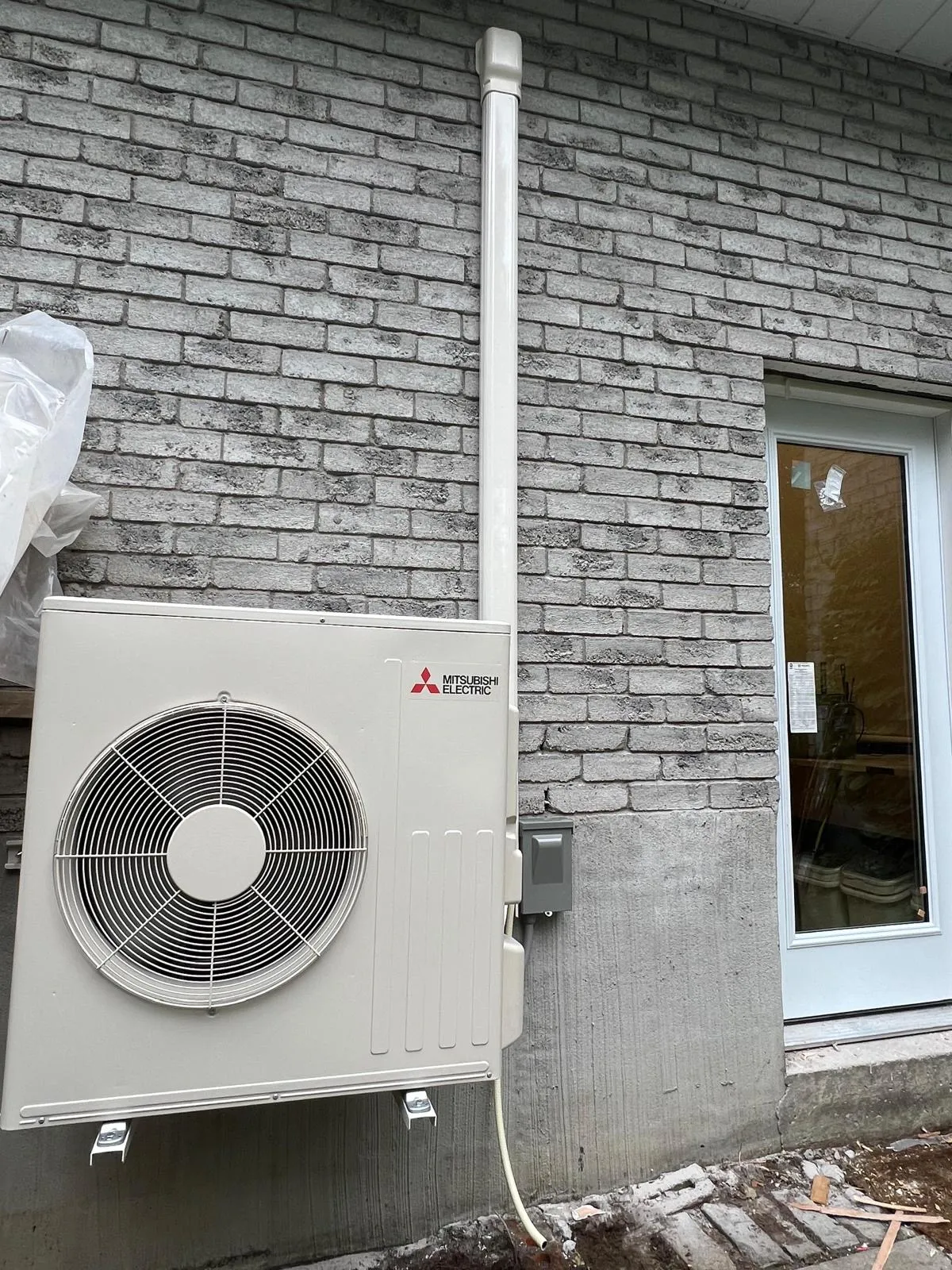
Richmond Hill homeowners are asking a sharper question in 2026: is a heat pump actually the right move for this house, on this street, in this climate? The honest answer depends on your home’s envelope, your ductwork, your electrical service, and how you feel about gas as a back-up. The good news is that the technology has matured, the rebate stack is meaningful, and a properly sized system can quietly outperform what most older furnaces and ACs were doing on their best day.
This guide walks through what works in Richmond Hill specifically — the older bungalows around Mill Pond, the larger two-storeys in Bayview Hill and Oak Ridges, and the newer infills tucked along the moraine. The hilly terrain and mature tree canopy matter more than people think when we plan placement and airflow.
The short version: Cold-climate heat pumps work well in Richmond Hill, with most homes best served by a hybrid heat pump + gas furnace setup. Expect installed costs in the mid-four to low five-figure range before Ontario and federal rebates. Sizing, ductwork, and electrical capacity matter more than brand — see our heat pump vs furnace comparison for the trade-offs.
Why heat pumps make sense in Richmond Hill
A heat pump is just an air conditioner that runs in reverse — it moves heat rather than burning fuel to create it. In a Richmond Hill shoulder season (think October and April), one unit of electricity can deliver roughly three to four units of heat. That efficiency is why heat pumps have become the default recommendation across most of Southern Ontario.
Richmond Hill’s climate sits in a sweet spot for the technology. Winters are cold but rarely sustained at extreme lows, and summers are hot and humid enough that you already need cooling. A heat pump replaces both your AC and a meaningful portion of your furnace runtime with a single, quieter, more efficient piece of equipment.
Worth knowing: A heat pump is not a magic bullet for a leaky house. If your attic insulation is thin or your basement is uninsulated, fix that first — every dollar spent on the envelope pays back faster than a larger heat pump.
Cold-climate performance: what the numbers really mean
Older heat pumps struggled below about -10 °C. Modern cold-climate (CCHP) variable-capacity units are a different category of product. The leading inverter-driven systems maintain rated capacity down to roughly -15 °C and continue producing useful heat well below that.
Two specs matter when comparing:
- HSPF2 — Heating Seasonal Performance Factor (the higher, the better; look for 9+).
- Capacity at -15 °C — the percentage of nameplate output the unit holds at that temperature.
Here is a simplified comparison of what you can typically expect across categories as of 2026:
| System type | Typical HSPF2 | Capacity at -15 °C | Best fit in Richmond Hill |
|---|---|---|---|
| Standard central heat pump | 7.5 – 8.5 | 60 – 75% | Mild-winter back-up scenarios |
| Cold-climate ducted heat pump | 9.0 – 10.5 | 85 – 100% | Most Richmond Hill detached homes |
| Cold-climate ductless (multi-zone) | 9.5 – 11.0 | 85 – 100% | Additions, lofts, no-duct rooms |
| Hybrid (CCHP + gas furnace) | 9.0+ | 100% (gas takes over) | Older homes, deep-cold reliability |
For most Richmond Hill homeowners, the hybrid row is where we land. The heat pump handles 80–90% of annual heating hours, and the furnace covers the coldest mornings without breaking a sweat.
Sizing for Richmond Hill homes (and why “bigger” is usually wrong)
Oversizing is the single most common mistake we see when homeowners shop on capacity alone. An oversized heat pump short-cycles, removes less humidity in summer, and wears out faster.
We perform a Manual J load calculation on every install. That means measuring windows, insulation values, orientation, infiltration, and occupancy — not just looking at square footage. A 2,400 sq ft Bayview Hill two-storey built in 2008 often needs a smaller unit than a 1,600 sq ft 1960s bungalow on Yonge Street with original windows.
A rough sanity check (not a substitute for a real calc):
- Newer, well-insulated home: ~25–30 BTU/h per sq ft of heating load.
- Average GTA home from the 1980s–90s: ~30–40 BTU/h per sq ft.
- Older, leakier home pre-1970: ~40–55 BTU/h per sq ft.
If a contractor sizes off the existing furnace’s nameplate, get a second opinion. Old furnaces were almost always oversized.
Hilly terrain, trees, and placement details
Richmond Hill earns its name. The grade, mature trees, and lot orientations affect a heat pump install in ways flat-lot installers miss.
- Snow and ice load: Outdoor units should sit on a wall bracket or elevated pad — typically 18–24 inches off grade — to clear snow and allow defrost runoff.
- Drainage: On sloped lots, the pad needs to direct condensate away from the foundation, not toward it.
- Tree debris: Maples and pines around mature properties shed onto coils. A small clearance buffer and a seasonal rinse extend equipment life.
- Noise to neighbours: Modern units are quiet (50–55 dB at 1 m), but a unit tucked into a narrow side yard can echo. Placement and anti-vibration mounts matter.
We assess all of this on the site visit before quoting — generic online estimates can’t.
Electrical capacity and panel realities
A heat pump pulls more continuous current than a furnace’s blower. Many Richmond Hill homes from the 1980s and earlier run 100-amp service, which can be tight once you add a heat pump, EV charger, and induction range to the mix.
We check three things during the assessment:
- Service size — 100A versus 200A.
- Available breaker space in the existing panel.
- Wire run length from panel to outdoor unit (voltage drop matters).
If a service upgrade is needed, we coordinate with Alectra and pull the permits as part of the project. Budget roughly $2,500–$5,000 for a 100A to 200A upgrade as of 2026, depending on mast and meter base condition.
Rebates and what they actually pay in 2026
Rebate programs change frequently, and we won’t quote specific dollar figures here that may be stale by the time you read this. As of 2026, qualifying Richmond Hill homeowners can typically stack federal and provincial incentives for cold-climate heat pumps, with additional support for income-qualified households.
For the current numbers and eligibility rules, see our up-to-date Ontario HVAC rebate guide. For a project-specific breakdown including installed price and net-of-rebate cost, see our forthcoming heat pump installation cost guide for the GTA or request a written quote.
Heads up: Most rebate programs require a pre-installation home energy assessment and use of a participating contractor. We’ll flag this on day one so nothing gets left on the table.
What a typical Richmond Hill install looks like
A clean changeover for a detached home on a standard lot generally runs like this:
- Day 0: Home assessment, load calc, electrical check, written quote.
- Day 1 (AM): Old AC removal, line set inspection or replacement, pad/bracket placement.
- Day 1 (PM): Indoor coil swap (or air handler), refrigerant charge, controls and thermostat.
- Day 2: Commissioning, balancing, owner walk-through, permit close-out.
Multi-zone ductless or projects with electrical service upgrades stretch this to three or four working days. We stage the work so heat or cooling is never out overnight if at all possible.
When to call Delson Air
If you’re weighing a heat pump for a Richmond Hill home — whether it’s a replacement, a new build, or a hybrid retrofit — the right next step is a real site visit and a written quote, not a phone estimate. Delson Air is a local, licensed, TSSA-licensed, and Enbridge Authorized Contractor serving Richmond Hill and the wider GTA. We size honestly, install cleanly, and stand behind the work.
Call us at (647) 467-9919, see what we install on our heat pumps service page, or book a no-pressure assessment through our contact page. Your comfort, our priority.
FAQ
Common questions
Do heat pumps actually work in Richmond Hill winters?
Should I keep my gas furnace or go fully electric?
How much does a heat pump cost in the GTA in 2026?
How long does installation take in a typical Richmond Hill home?
Delson Air Team
Licensed, insured, TSSA-certified HVAC technicians serving the Greater Toronto Area.
Keep reading
More from the Journal
Why Furnaces Fail in October: GTA Pre-Winter Warning Signs
October is when GTA furnaces fail most. Learn the pre-winter warning signs Toronto and Mississauga homeowners should catch before the first hard freeze.

Carbon Monoxide Safety: Why GTA Homes Need an Annual Furnace Check
Carbon monoxide is invisible, odourless, and produced by every gas furnace in the GTA. Here's how an annual furnace check keeps your Toronto-area home safe.

Hydronic Heating: Is It Right for Your Older GTA Home?
Is hydronic heating right for an older Toronto or GTA home? Compare radiator retrofits, in-floor retrofits, condensing boilers, costs, and Ontario climate fit.