Furnace Repair in Markham: Common Issues and Solutions
From older Unionville homes to newer Cornell builds, here are the furnace problems Markham homeowners see most — and what a licensed GTA repair actually involves.

Markham has one of the more varied housing stocks in the GTA — late-1990s two-storeys in Unionville and Markham Village, early-2000s family homes in Berczy and Wismer, and newer builds in Cornell and Cathedraltown. Each era brought a different furnace style, a different duct layout, and a different set of repair calls we end up on.
If your furnace is acting up, the fix usually isn’t mysterious. Below are the issues we see most often in Markham homes, what causes them, and what an honest repair looks like.
The short version: Most Markham furnace repairs come down to ignition components, flame sensors, blower motors, or pressure switches — not whole-unit failure. Try the basics from our no-heat checklist first, then call a licensed GTA technician. For furnaces over 15 years old, repair-vs-replace math matters.
What’s different about Markham furnaces
Older Unionville and Markham Village homes often run mid-efficiency furnaces (80% AFUE) with a metal flue up the chimney. They’re simple, durable, and getting harder to find parts for. Many were oversized for the home when installed, which means short cycling is a chronic problem.
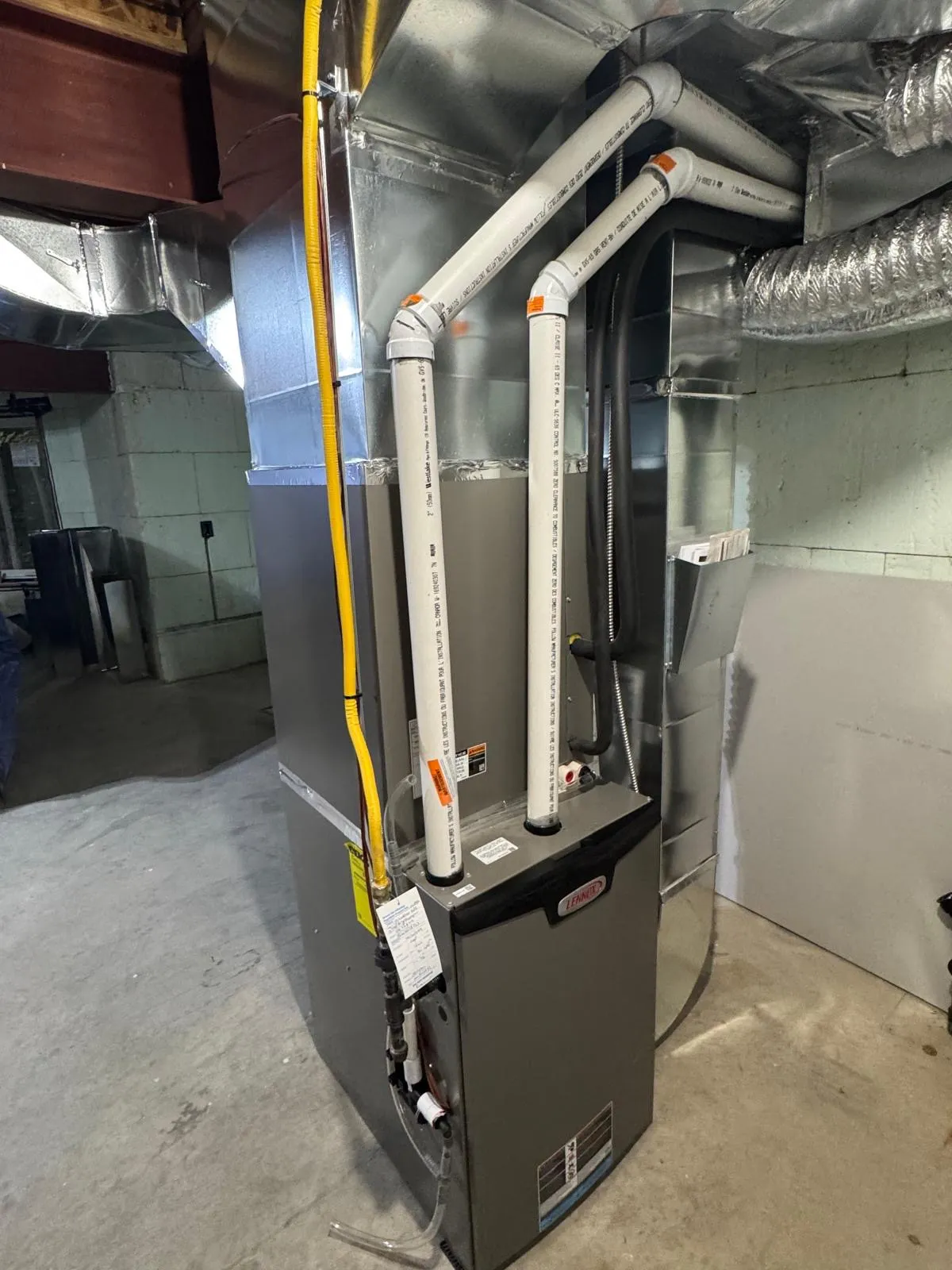
Newer Cornell, Berczy, and Cathedraltown builds almost universally use high-efficiency condensing furnaces (90–98% AFUE) that vent out the side of the house through white PVC pipe. These are more efficient but have more electronics — and more failure points — than the old workhorses they replaced.
Knowing which camp your furnace falls into changes the diagnosis. A short rumble at startup means one thing on an 80% unit and something different on a condensing one.
The five repairs we do most in Markham
Across thousands of service calls, the same handful of issues come up again and again. Here’s the short list:
| Issue | What it looks like | Typical fix | Rough cost (2026 CAD) |
|---|---|---|---|
| Dirty flame sensor | Furnace lights, then shuts off in seconds | Clean or replace sensor | $200–$320 |
| Failed hot-surface igniter | Clicking, no flame, lockout | Replace igniter | $280–$450 |
| Stuck pressure switch | Inducer runs, then fault code | Clear hose / replace switch | $250–$500 |
| Blower motor / capacitor | Loud humming, weak airflow, blower won’t start | Replace capacitor or motor | $300–$1,100 |
| Cracked condensate trap or clogged drain | Water on the floor, lockout on safety | Clear drain, replace trap | $200–$400 |
Prices are typical full-trip ranges including diagnostic, parts, and labour. Exact cost depends on the brand, the part, and how the unit is installed.
Flame sensor — the cheapest fix in HVAC
A flame sensor is a thin metal rod sitting in the burner flame. Over time it gets coated with oxidation and stops “seeing” the flame, so the furnace shuts the gas off as a safety measure. Symptoms: the burners light, run for 3–10 seconds, then quit. The cycle repeats until the furnace locks out.
Cleaning takes minutes. We see this one constantly in Berczy and Wismer homes built between 2000 and 2010.
Hot-surface igniter — the predictable failure
The igniter is a glow-stick-style ceramic element that lights the gas. They’re consumable parts that typically last 5–8 years. When one fails, you’ll hear the inducer fan and a click, but no flame. Replacement is straightforward on most brands.
Pressure switch faults — the condensing-furnace special
High-efficiency furnaces use a small pressure switch to confirm exhaust is venting properly before allowing ignition. In Markham, blocked intake or exhaust pipes from snow drifts, bird nests, or even ice from a south-facing wall are common culprits. So is a kinked rubber hose inside the unit.
A pressure switch that “trips” isn’t broken — it’s doing its job. The real problem is almost always upstream: a blockage, a leak, or a slow inducer fan. Always check why it tripped, not just whether to replace it.
Blower motors and the dreaded hum
If your blower hums but doesn’t spin, the run capacitor has likely failed. It’s a $30 part and a 20-minute job. If the capacitor checks out, the motor bearings are usually the next suspect — and on an older furnace, that’s a sign the unit’s time is winding down.
Condensate problems — water where it shouldn’t be
This one is a Cornell and Cathedraltown classic. The trap that catches furnace condensate can crack or clog, dumping water around the base of the furnace. A float switch then shuts everything off. Symptoms: no heat plus a small puddle. Don’t ignore it — long-term water damage to the heat exchanger ends a furnace early.
How we diagnose a Markham no-heat call
When you call us, we triage on the phone first. Often the fix is something you can try yourself — a tripped switch, a dead thermostat battery, or a clogged filter. Our full no-heat troubleshooting guide walks through every safe homeowner check.
If it needs a tech, here’s what a proper diagnostic looks like:
- Read the blink code on the furnace’s status LED
- Check inlet gas pressure and manifold pressure
- Inspect flame signal in microamps
- Verify static pressure across the blower (catches duct restriction)
- Confirm proper venting and condensate drainage
A repair quoted without these steps is a guess. We’ll show you the numbers and explain what they mean.
Strange sounds and what they tell us
Furnaces talk. A new noise almost always means something specific — a failing inducer bearing, a cracked heat exchanger, a loose blower wheel. Don’t ignore booms, scrapes, or metallic rattles. We wrote a full guide on what furnace noises mean so you can describe what you’re hearing accurately when you call.
Repair or replace?
In a Markham Village home with a 22-year-old mid-efficiency furnace, putting $900 into a control board and an inducer motor rarely makes sense. In a 2014 Cornell build with a high-efficiency unit and one bad igniter, repair is obviously the right call.
The decisions in between are where good advice matters. We’ll quote the repair and the replacement, including current Ontario and federal rebates where applicable, and let you choose without pressure.
Preventing the next repair
The cheapest repair is the one you don’t need. A simple seasonal routine prevents most of the failures above:
- Change or check filters every 1–3 months during heating season
- Book annual maintenance in early fall — before the first cold snap, when our schedule is open
- Keep vents and returns unblocked by furniture and rugs
- Clear exhaust and intake pipes of snow, leaves, and nests
- Watch the area around your furnace for water, soot, or rust streaks
Our upcoming fall HVAC maintenance checklist for Ontario breaks the whole annual routine down step by step.
When to call Delson Air
If you’re in Markham — Cornell, Berczy, Unionville, Markham Village, Wismer, Cathedraltown, or anywhere across the GTA — and your furnace isn’t behaving, we can help. Delson Air is fully licensed, insured, TSSA-licensed, and an Enbridge Authorized Contractor, so the work is done to Ontario code and properly documented.
Call (647) 467-9919 for same-day diagnostic service during heating season, learn more about our furnace repair services, or reach out through our contact page and a real person will get back to you. Your comfort really is our priority — especially when the temperature drops.
FAQ
Common questions
How much does a typical furnace repair cost in Markham?
How long should a furnace last in a Markham home?
Is it worth repairing an older furnace or should I replace it?
Do you service furnaces in all Markham neighbourhoods?
Delson Air Team
Licensed, insured, TSSA-certified HVAC technicians serving the Greater Toronto Area.
Keep reading
More from the Journal
Why Furnaces Fail in October: GTA Pre-Winter Warning Signs
October is when GTA furnaces fail most. Learn the pre-winter warning signs Toronto and Mississauga homeowners should catch before the first hard freeze.
Carbon Monoxide Safety: Why GTA Homes Need an Annual Furnace Check
Carbon monoxide is invisible, odourless, and produced by every gas furnace in the GTA. Here's how an annual furnace check keeps your Toronto-area home safe.

Hydronic Heating: Is It Right for Your Older GTA Home?
Is hydronic heating right for an older Toronto or GTA home? Compare radiator retrofits, in-floor retrofits, condensing boilers, costs, and Ontario climate fit.