

Pre-Fall Furnace Prep: 5 Things to Do in August
Get your GTA furnace ready before the Toronto cold snap arrives. Five August jobs — filter, vents, thermostat, test run, and tune-up — to avoid a no-heat call.
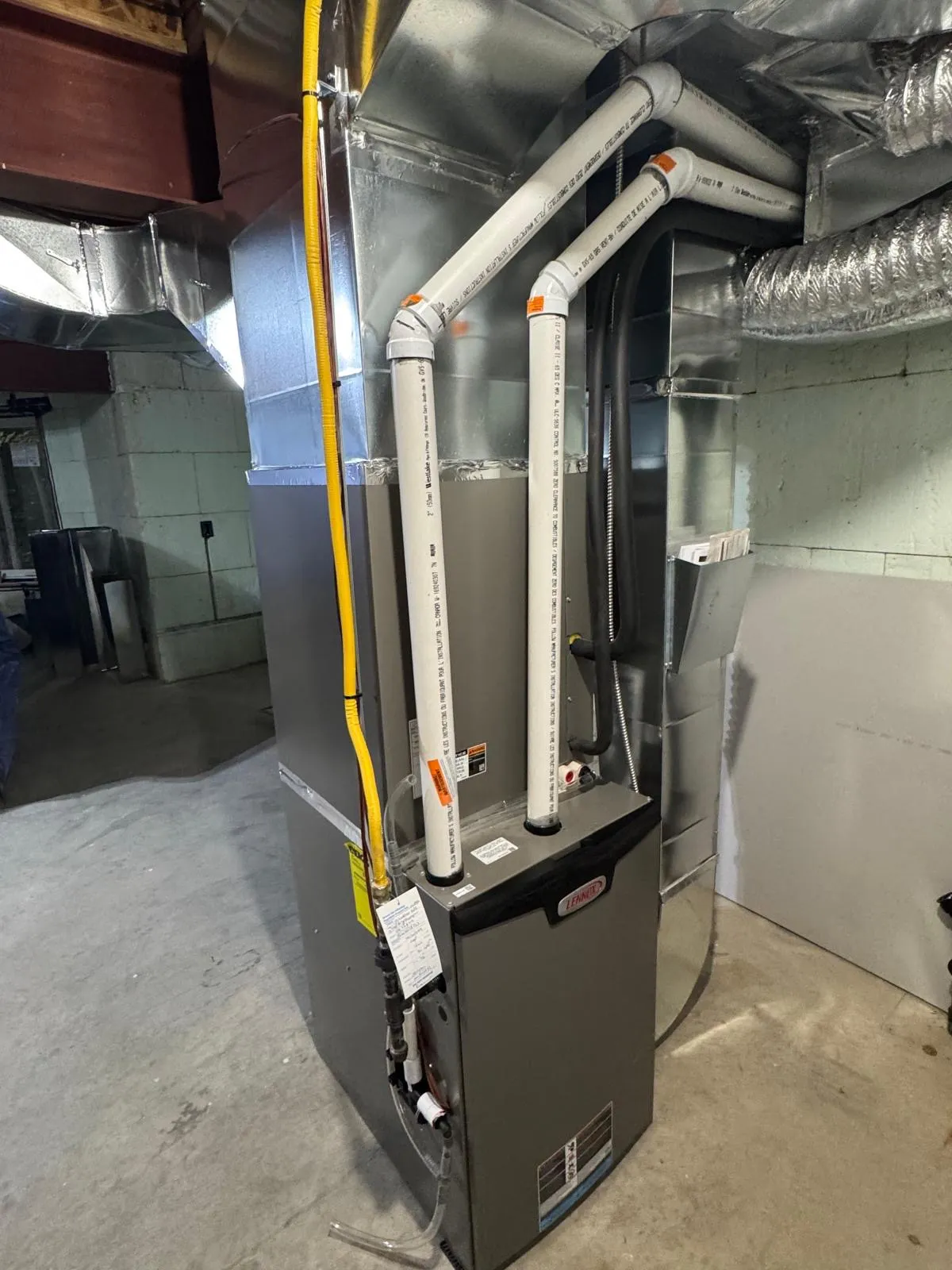
Toronto summers have a way of making winter feel impossibly far away. Then late September arrives, the wind shifts off the lake, and suddenly the furnace you haven’t thought about since April needs to wake up and carry your family through another Ontario heating season.
August is the sweet spot to get ahead of that. The weather’s still warm, HVAC companies aren’t yet buried under emergency no-heat calls, and any issue you uncover can be fixed at a sensible pace. Here are the five jobs to knock out this month.
The short version: Spend an hour in August on five furnace tasks — replace the filter, clear vents and the outdoor intake, test the thermostat, run a short heat cycle, and book a professional tune-up. A test run now catches issues like a furnace that won’t start or strange new noises while it’s still easy to schedule a furnace service visit.
Why August (and not October)
By the time the first real cold front rolls into the GTA — usually late September in Toronto and Mississauga, a touch earlier north in Vaughan and Richmond Hill — every HVAC phone line in the region is ringing off the hook. Furnaces that sat idle for six months wake up cranky, and homeowners discover problems all at the same time.
Book a tune-up in August and you choose the day. Wait until your furnace fails on the first frosty night and you join a queue. Parts that are routine in summer can also be back-ordered once heating season is in full swing.
Rule of thumb: if your furnace is over 10 years old, treat the August check as non-negotiable. Older systems are the ones most likely to fail when first asked to run hard.
1. Replace the furnace filter
This is the cheapest, highest-impact job on the list. A dirty filter chokes airflow, makes the blower work harder, and can trigger high-limit shutdowns once the furnace runs at full load in January.
Pull the old filter and check the size printed on the frame (something like 16x25x1 or 20x25x4). Slide a fresh one in with the airflow arrow pointing toward the furnace. If you’re not sure where the filter lives or which one to buy, our furnace filter replacement guide walks through it step by step.
For most GTA homes, a MERV 8 to MERV 11 filter is the right balance — fine enough to catch dust and pollen, open enough not to strangle the system.
2. Clear vents, returns, and the outside intake
Summer is when registers get blocked. Furniture shifts, rugs slide, kids stash toys behind the couch. Walk every room and confirm:
- Every supply register is open and unblocked
- Every return air grille has clear space in front of it
- The basement utility room around the furnace is uncluttered
Then head outside. High-efficiency furnaces vent through two white PVC pipes on an exterior wall — usually near the foundation. Check that the intake and exhaust are clear of:
- Spider webs and wasp nests (very common in August)
- Mulch, weeds, or shrubs grown in over summer
- Bird or rodent nesting material
A blocked intake or exhaust is one of the most common reasons a furnace locks out on the first cold morning.
3. Test the thermostat — and change its batteries
Pop the thermostat off the wall. If it takes AA or coin batteries, replace them. Dead thermostat batteries are responsible for a surprising number of “my furnace won’t turn on” calls every fall.
Wipe the display, check that the date and schedule look right, and if you have a smart thermostat (Nest, ecobee, Honeywell), make sure it’s still on your Wi-Fi and the firmware is current. While you’re there, change the system mode from Cool to Heat and bump the setpoint a few degrees above room temperature.
4. Run a short heat-cycle test
This is the one most people skip — and it’s the most valuable. Pick a cool morning, open a window or two so the house doesn’t roast, and let the furnace run for 10 to 15 minutes.
You’re listening and feeling for:
| What to check | What’s normal | What’s a red flag |
|---|---|---|
| Startup | Quiet click, soft whoosh as burners light | Loud boom or repeated clicks without ignition |
| Blower | Steady airflow at registers within 60–90 seconds | No air, weak air, or burning smell beyond first minute |
| Sound | Low hum, gentle warm-air whoosh | Banging, grinding, squealing, rattling |
| Air at registers | Warm within 2–3 minutes | Cool air, or warm air that cuts out quickly |
| Smell | Faint dust burn-off on first run only | Persistent burning, gas, or musty smell |
A faint dust smell on the first run of the season is normal — it’s the dust that settled on the heat exchanger over summer burning off. It should fade within 15 to 20 minutes. Anything else on this chart deserves a closer look. If it won’t fire at all, our guide on why a furnace won’t turn on covers the common culprits. New noises? Our furnace noises explainer decodes the bangs and whistles.
Safety note: if you smell rotten eggs or sulphur at any point, shut the furnace off, leave the house, and call Enbridge’s emergency line at 1-866-763-5427. That smell is added to natural gas specifically so leaks are obvious.
5. Book the professional tune-up
DIY checks catch the obvious stuff. They don’t catch a cracked heat exchanger, an out-of-spec gas pressure, or a weak flame sensor that’ll fail in November.
A proper tune-up by a TSSA-licensed technician typically covers:
- Heat exchanger inspection (cracks here are a carbon monoxide risk)
- Burner cleaning and flame sensor service
- Gas pressure check at the manifold
- Combustion analysis (CO and efficiency readings)
- Inducer motor and blower motor inspection
- Safety control testing — limit switch, rollout, pressure switch
- Condensate trap and drain cleaning (high-efficiency units)
- Venting inspection inside and out
Most manufacturer warranties also require documented annual maintenance to stay valid. Ask for a written report — if a part is borderline, you want it on paper before it actually fails.
A 30-minute August walkaround
If you only have half an hour this weekend, here’s the priority order:
- Filter — swap it (5 minutes)
- Thermostat batteries — change them (5 minutes)
- Outside PVC vents — clear them (5 minutes)
- Heat-cycle test — 10–15 minutes
- Book the tune-up — 2 minutes on the phone
Do those five things and you’ve handled roughly 80% of the failure modes that send furnaces to the repair shop on cold nights.
When to call Delson Air
If your August test run turns up a noise, a smell, a no-start, or a furnace that’s just feeling its age, Delson Air is the licensed, insured, TSSA-licensed and Enbridge Authorized HVAC contractor your neighbours across the GTA already trust. We service Toronto, Mississauga, Markham, Vaughan, Brampton, Richmond Hill, Oakville, and surrounding communities — and August is the easiest month of the year to get on our schedule.
Book a pre-season furnace tune-up or get a quote through our contact page, or call us directly at (647) 467-9919. Your comfort is our priority — and getting ahead of winter is the surest way to keep it that way.
FAQ
Common questions
Why prep the furnace in August instead of waiting until October?
How long should a furnace tune-up take in the GTA?
Do I really need to run the furnace in August to test it?
How much does a fall furnace tune-up cost in Ontario?
Delson Air Team
Licensed, insured, TSSA-certified HVAC technicians serving the Greater Toronto Area.
Keep reading
More from the Journal
HVAC Maintenance Plans: What's Included in 2026
What an HVAC maintenance plan actually covers in 2026 — priority dispatch, repair discounts, waived diagnostic fees, and tune-ups for GTA homeowners.

Fall HVAC Maintenance Checklist for Ontario Homes
A complete fall HVAC maintenance checklist for GTA and Ontario homeowners — furnace prep, filters, humidifier, thermostat, ducts, and when to call a pro.
Furnace Tune-Up in Toronto: Why Early Fall Is the Best Time
Why early fall is the smartest window to book a furnace tune-up in Toronto and the GTA — what's included, what it costs, and what to expect.